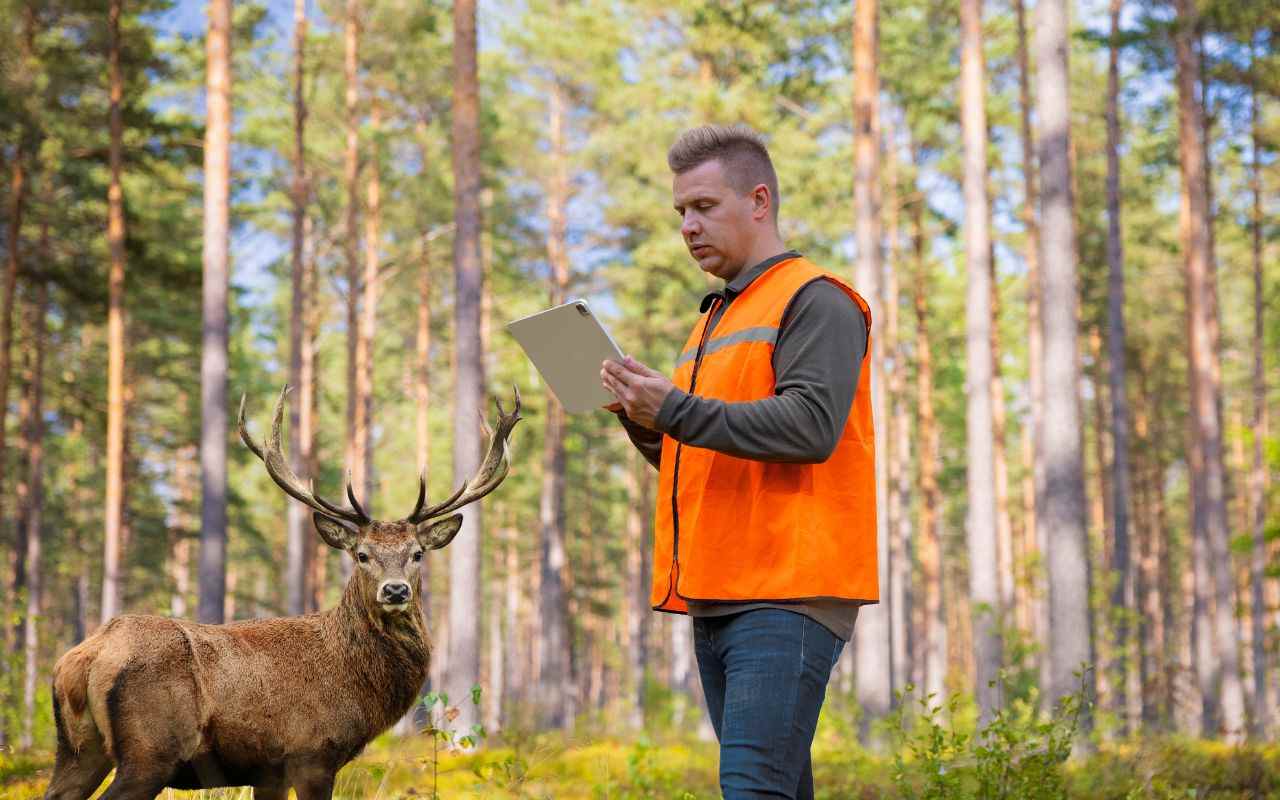
Florida gives hunters a little bit of everything. You can chase whitetails in pine flatwoods, call Osceola turkeys in palmetto country, hunt doves over fields, and spend late fall and winter on ducks, geese, snipe, and woodcock. That variety is one reason Florida stays popular with both experienced hunters and beginners.
The state is especially well known for white-tailed deer, Osceola wild turkeys, doves, waterfowl, quail, squirrels, rabbits, wild hogs, and year-round predator opportunities on some species. Public access is a big part of that picture too. Florida’s wildlife management area system covers more than 6 million acres, so hunters have a lot of room to explore beyond private land.
Licensing is fairly straightforward, but the details matter. Many hunts require more than a basic hunting license, especially if you plan to hunt deer, turkey, waterfowl, or public land. Florida also has separate season structures by deer zone and special rules for wildlife management areas, so one-size-fits-all planning does not work here.
That is why every hunter should review the annual rules before opening day. Dates, permits, youth opportunities, bag limits, and WMA rules can shift from year to year.
Florida Hunting Season Overview
| Category | Details |
|---|---|
| Licensing Requirement | Hunting license required unless exempt; extra permits often needed for deer, turkey, waterfowl, and WMAs |
| Main Game Species | Deer, Osceola turkey, dove, duck, geese, quail, squirrel, rabbit, wild hog |
| Public Hunting Areas | 6+ million acres in the WMA system |
| Online Harvest Reporting | Required for deer and turkey; bear permit holders also report harvests |
| Youth Hunting Opportunities | Youth deer weekends, youth turkey hunts, youth waterfowl days, family quota hunts |
| Public Land Programs | WMAs, national forests, state forests, quota hunts, family hunts |
| Hunter Education Requirement | Required for most hunters born on or after June 1, 1975 |
| WMA Warning | Statewide dates usually do not control WMA hunts; area brochures can differ |
Florida’s statewide season dates are only the starting point. If you hunt public land, always check the specific WMA brochure because access days, check stations, bag limits, and weapon rules may be different.
Big Game Hunting Seasons
Florida’s big-game focus is deer first, with turkey close behind. Deer seasons are split into Zones A, B, C, and D, and antler rules can change again at the DMU level.
Deer Hunting Season
| Season Type | Dates | Bag Limit | Notes |
|---|---|---|---|
| Archery | Zone A: Aug. 1–30; Zone B: Oct. 17–Nov. 15; Zone C: Sept. 19–Oct. 18; Zone D: Oct. 24–Nov. 25 | Counts toward 5-deer annual limit | Bows only |
| Crossbow | Zone A: Aug. 1–Sept. 4; Zone B: Oct. 17–Nov. 20; Zone C: Sept. 19–Oct. 23; Zone D: Oct. 24–Nov. 25 and Nov. 30–Dec. 4 | Counts toward annual limit | Crossbow, bow, airbow |
| Muzzleloader | Zone A: Sept. 5–18; Zone B: Nov. 21–Dec. 4; Zone C: Oct. 24–Nov. 6; Zone D: Dec. 5–11 and Feb. 22–28 | Counts toward annual limit | Muzzleloaders and approved archery gear |
| Firearms / General Gun | Zone A: Sept. 19–Oct. 18 and Nov. 21–Jan. 3; Zone B: Dec. 5–Feb. 21; Zone C: Nov. 7–Jan. 24; Zone D: Nov. 26–29 and Dec. 12–Feb. 21 | Daily 2; possession 4 | Centerfire rifles, shotguns, handguns, muzzleloaders, approved PCP air guns, bows/crossbows |
| Youth Hunt | Zone A: Sept. 12–13; Zone B: Nov. 28–29; Zone C: Oct. 31–Nov. 1; Zone D: Dec. 5–6 | 1 deer for the weekend | Youth 15 and younger with adult supervision |
| Special Hunts | Antlerless dates vary by DMU; deer-dog training also has zone dates | Antlerless counts toward annual limit | Check DMU and WMA rules carefully |
Deer zones, antler restrictions, and reporting
Florida uses four broad deer zones, but the more important map for serious deer hunters is the DMU map. Some units allow a simple 2-point buck, while others require either 3 points on one side or a 10-inch main beam on one side. Youth hunters get one annual exception for an antlered deer that does not meet DMU antler rules as long as one antler is at least 5 inches long.
The statewide deer limit is 5 deer per license year, with only 2 antlerless deer statewide in most areas. DMU D2 is the exception, where 3 of the 5 may be antlerless. Antlerless deer dates also vary by DMU, so hunters should never assume private-land deer opportunities are the same across the whole state.
Florida also requires deer harvest logging before the animal is moved from where it fell, followed by reporting within 24 hours. That deadline also comes sooner if the deer is processed, transferred, or leaves the state.
Deer Hunting Rules
| Regulation | Requirement |
|---|---|
| Hunter Orange | Minimum 500 square inches of daylight fluorescent orange on public lands while hunting deer or accompanying deer hunters |
| Legal Weapons | Season-specific; rimfire not legal for deer |
| Reporting Deadline | Log before moving; report within 24 hours |
| Baiting Rules | Do not hunt over unlawfully placed feed; special caution around feeders and feeding stations |
| Tagging Requirements | Record harvest immediately; follow transport and transfer rules |
Elk Hunting Season
Florida does not have a statewide elk season.
| Season | Dates | Permit Type |
|---|---|---|
| Elk | No open season in Florida | Not applicable |
There is no Florida elk draw. Elk mainly appear in Florida regulations in CWD transport rules for carcasses brought in from other states.
Bear Hunting Season
Florida does not list a general public statewide bear season in the main 2026–2027 season tables, but a private-land bear harvest program is in place for qualifying properties.
| Season | Dates | Unit/Zone |
|---|---|---|
| Private Lands Bear Harvest Program | Oct. 1–Dec. 31 | Permit-specific enrolled private properties |
This is not a walk-up public season. Properties generally must be at least 5,000 contiguous acres, meet habitat standards, and submit bear survey data. Tag numbers scale with acreage and bear use, with up to 3 tags on the largest qualifying tracts. Permit holders must report harvested bears within 24 hours, and unused tags must be returned after the permit expires.
Turkey Hunting Seasons
Florida is famous for Osceola turkey hunting, and spring season is the headline event. If turkey is your main goal, you can also compare this guide with our Florida turkey season guide for a more turkey-focused read.
Spring Turkey Season
| Season | Dates | Bag Limit |
|---|---|---|
| Youth Hunt South of SR 70 | Feb. 26–March 1 | Counts toward spring limit |
| Youth Hunt North of SR 70 | March 12–15 | Counts toward spring limit |
| Regular Season South of SR 70 | March 6–April 11 | 2 birds for spring season |
| Regular Season North of SR 70 | March 20–April 25 | 2 birds for spring season |
Fall Turkey Season
| Season | Dates | Bag Limit |
|---|---|---|
| Archery / Crossbow / Muzzleloader overlap by zone | Zone-based fall dates below | 2 for all fall seasons combined |
| Firearms | Zone A: Oct. 5–18 and Nov. 21–Jan. 3; Zone B: Dec. 5–Jan. 31; Zone C: Nov. 7–Jan. 3; Zone D: Nov. 26–29 and Dec. 12–Jan. 17 | Daily 2; season limit 2 |
Turkey Hunting Regulations
| Rule | Requirement |
|---|---|
| Shotgun Restrictions | Use lawful firearms or approved archery gear; broadheads required for bows/crossbows |
| Hunter Orange Requirement | Not a statewide spring turkey requirement, but WMA rules may differ |
| Legal Hunting Hours | Spring: 1/2 hour before sunrise to sunset on private lands and most WMAs; some WMAs close at 1 p.m. |
| Youth Requirements | Hunter must be 15 or younger and supervised by an adult 18+ |
In spring, only gobblers or bearded turkeys are legal. On lands outside the WMA system, you may take 2 spring birds in one day if that stays within the season limit. On many WMAs, the daily limit is tighter, so always read the area brochure.
Waterfowl Hunting Seasons
Florida offers both early and regular duck opportunities, plus youth and veteran days. Unlike some states, Florida’s general duck and goose dates are handled on a statewide basis rather than a north/central/south split.
Duck Seasons
| Zone | Dates |
|---|---|
| North | Florida uses statewide duck dates: Sept. 19–23 (teal/wood duck), Nov. 21–29, Dec. 12–Jan. 31 |
| Central | Same statewide dates |
| South | Same statewide dates |
Goose Seasons
| Zone | Dates |
|---|---|
| North | Canada goose statewide: Sept. 5–27, Nov. 21–29, Dec. 1–Jan. 30 |
| Central | Same statewide dates |
| South | Same statewide dates |
Special Waterfowl Hunts
| Hunt Type | Dates |
|---|---|
| Youth Waterfowl | Nov. 14 and Feb. 13 |
| Veteran Waterfowl | Feb. 6–7 |
| Early Teal / Wood Duck | Sept. 19–23 |
Waterfowl Requirements
| Requirement | Details |
|---|---|
| HIP Registration | Florida migratory bird permit required at no cost |
| Federal Duck Stamp | Required for waterfowl hunters age 16+ |
| State Stamp | Florida waterfowl permit required |
Florida’s regular duck bag is 6 total ducks, with species caps inside that total. Waterfowl hunters also need nontoxic shot, plugged shotguns, and close attention to special local restrictions in places like Leon County waters and certain Gulf waters.
Small Game Hunting Seasons
Small game is a great way to introduce new hunters to Florida woods.
| Species | Season Dates | Daily Limit |
|---|---|---|
| Squirrel | Year-round | 12 |
| Rabbit | Year-round | 12 |
| Pheasant | No statewide season listed | N/A |
| Quail | Nov. 14–March 7 | 12 |
| Grouse | No statewide season listed | N/A |
| Dove | Sept. 26–Oct. 18; Nov. 14–Dec. 6; Dec. 19–Jan. 31 | 15 |
| Woodcock | Dec. 18–Jan. 31 | 3 |
| Snipe | Nov. 1–Feb. 15 | 8 |
Regional note: WMA dates can be very different from these statewide seasons, especially for quail, dove, and small game with dogs.
Furbearer Hunting and Trapping Seasons
| Species | Dates | Notes |
|---|---|---|
| Coyote | Year-round | Day and night gun take allowed on private land |
| Fox | No open season | Chasing with dogs allowed year-round on private land, but taking is prohibited |
| Raccoon | Year-round | Day or night; special night-weapon rules apply |
| Opossum | Year-round | Day or night; special night-weapon rules apply |
| Beaver | Year-round | No limit |
| Bobcat | Hunting: Dec. 1–March 31; Trapping: Dec. 1–March 1 | No limit |
| Otter | Dec. 1–March 1 | No limit; pelt tagging rules apply |
Trapping regulations: Florida allows live traps and snares, including power snares, but requires checks every 24 hours. Foothold, body-grip, and dog-proof raccoon traps are generally prohibited unless specially authorized. Bobcat and otter pelts may require CITES tags if sold or transported. This guide is based on the latest Florida information available for 2026–2027 and should still be double-checked before your trip with the Florida Fish and Wildlife Conservation Commission.
Additional Hunting Opportunities
| Species | Season Dates |
|---|---|
| Crow | Aug. 8–Oct. 25 (Sat.–Sun. only); Nov. 11–Feb. 18 |
| Frog | No closed season for most frogs/toads; protected species excluded |
| Turtle | Most legal freshwater turtles year-round, but strict species and method limits apply |
| Other Legal Species | Wild hog, skunk, raccoon, opossum, coyote, and beaver may be taken year-round outside WMAs |
Hunting Licenses and Fees
Resident License Fees
| License Type | Fee |
|---|---|
| Annual Hunting License | $17.00 |
| Deer Permit | $5.00 |
| Turkey Permit | $10.00 |
| Waterfowl Stamp | $5.00 |
| Trapping License | $26.50 |
Nonresident License Fees
| License Type | Fee |
|---|---|
| Annual Hunting License | $151.50 |
| Deer Permit | $5.00 |
| Turkey Permit | $125.00 |
| Waterfowl Stamp | $5.00 |
| Trapping License | $26.50 |
Youth and Senior Licenses
| License Type | Fee |
|---|---|
| Youth License | $17.00 |
| Senior License | Resident 65+ Hunt/Fish: No cost; Silver Sportsman’s 64+ Annual: $13.50 |
| Apprentice License | No separate apprentice fee; regular license cost applies under hunter safety deferral |
Florida also offers 5-year licenses, management area permits, no-cost migratory bird permits, and specialty season permits for archery, crossbow, and muzzleloader hunts. License buying and current availability are easiest to confirm through GoOutdoorsFlorida.
Hunter Education Requirements
| Requirement | Details |
|---|---|
| Minimum Age | Hunter safety rule mainly affects hunters 16+ born on or after June 1, 1975 |
| Hunter Safety Course | Required before buying a hunting license for most covered hunters |
| Apprentice Option | Hunter Safety Mentoring Deferral available |
| Online Course Availability | Yes, with course options through FWC |
Florida accepts hunter education from other states. Under the deferral option, the hunter must be supervised by a qualified adult age 21 or older who meets Florida requirements.
Public Hunting Land in Florida
Florida’s public hunting system is one of the state’s biggest strengths.
| Area Name | Acres | Popular Species |
|---|---|---|
| Big Cypress WMA | 728,000+ | Deer, turkey, hog |
| Osceola WMA | 266,000 | Deer, turkey, small game |
| Camp Blanding WMA | 56,000+ | Deer, turkey, dove |
| J.W. Corbett WMA | 60,330 | Deer, hog, turkey |
| Green Swamp WMA | 50,000+ | Deer, hog, small game |
| Big Bend WMA | 90,000 approx. | Deer, turkey, waterfowl |
Florida hunters can use WMAs, national forests, state forests, and cooperative public lands. The catch is that these areas often run on quota permits, special-opportunity weekends, check stations, or limited access rules.
Special Hunting Programs
Access Programs
| Program | Description |
|---|---|
| Walk-In Access | Limited compared with western states; access is mostly through WMAs and public lands |
| Private Land Access | Landowner permission required; private-land deer and bear programs exist |
| Youth Hunts | Deer, turkey, waterfowl, and supervised small-game opportunities |
| Draw Hunts | Quota permits for archery, muzzleloader, general gun, hog, turkey, and some family hunts |
Applications for quota and limited-entry hunts are handled online, and unsuccessful hunters should keep an eye on leftover or reissued permits.
Important Hunting Regulations
General Hunting Rules
| Regulation | Requirement |
|---|---|
| Hunter Orange | Required on public lands for deer hunting |
| Trespassing | License does not give permission to enter private land |
| Baiting | Do not hunt over unlawfully placed feed |
| Drones | Verify with FWC and WMA rules before use; do not use aircraft to shoot or harass wildlife |
| Spotlighting | Artificial lights cannot be used to take most game |
| Party Hunting | Each hunter should take and report his or her own animal |
| Road Hunting | Illegal from federal, state, or county road rights-of-way |
| Suppressors | Verify current firearm law and area rules before use |
A simple rule of thumb is this: if a tactic helps you unfairly locate, chase, or shoot wildlife, Florida likely regulates it tightly. On private land, permission matters. On public land, brochure language matters even more.
Hunting Hours
| Species | Legal Hunting Hours |
|---|---|
| Deer | 1/2 hour before sunrise to 1/2 hour after sunset |
| Turkey | Fall: same as deer; Spring: 1/2 hour before sunrise to sunset on private land and most WMAs |
| Waterfowl | 1/2 hour before sunrise to sunset |
| Small Game | Usually 1/2 hour before sunrise to 1/2 hour after sunset |
Raccoons, opossums, and coyotes may be taken at night, but the weapon rules are more limited for night raccoon and opossum hunting.
Harvest Reporting Requirements
| Species | Reporting Deadline |
|---|---|
| Deer | Log before moving; report within 24 hours |
| Turkey | Log before moving; report within 24 hours |
| Bear | Permit holders report within 24 hours |
| Elk | Not applicable in Florida |
Penalties for Hunting Violations
| Violation | Possible Penalty |
|---|---|
| Hunting Without License | Citation, fines, court costs, possible license suspension |
| Trespassing | Criminal trespass charges, fines, possible jail |
| Exceeding Bag Limits | Citation, restitution, loss of hunting privileges |
| Illegal Harvest | Misdemeanor or more serious charge depending on facts |
| Failure to Report Harvest | Citation and possible license consequences |
Penalties vary by offense, prior history, location, and species involved. Serious violations can also lead to equipment seizure and multi-state privilege suspension through the Wildlife Violator Compact.
Hunting Tips for the 2026–2027 Season
- Check your deer zone before planning dates.
- Read the WMA brochure if hunting public land.
- Buy all needed permits, not just the base license.
- Wear hunter orange when deer hunting public land.
- Keep a paper harvest log as backup.
- Report deer and turkey quickly after harvest.
- Confirm antler rules for your DMU before opening day.
- Pattern your shotgun before turkey and waterfowl season.
- Use nontoxic shot for waterfowl and coots.
- Ask private-land permission in writing when possible.
- Scout access roads and boat ramps ahead of time.
- Watch local weather and water levels in marsh and swamp country.
- Carry extra bug protection early in the season.
- Double-check sunrise and sunset times for legal shooting hours.
- Verify any late rule updates with FWC before you hunt.
Frequently Asked Questions
1. Do Florida statewide season dates apply on WMAs?
Not always. Many WMAs run special dates, quota permits, and check-in rules.
2. Do I need a deer permit in addition to a hunting license?
Yes, in most cases.
3. Can I hunt deer with a rimfire rifle in Florida?
No, rimfire cartridges are not legal for deer.
4. How many deer can I take in Florida?
The annual statewide limit is 5 deer, with antlerless restrictions.
5. Can youth hunt deer during youth weekend without hunter orange?
On public land deer hunts, orange rules still matter.
6. Is there a Florida elk season?
No.
7. Is there a general public bear season in 2026–2027?
Not in the standard statewide table; bear opportunity is permit-based on qualifying private land.
8. Do I need a duck stamp in Florida?
Yes, for waterfowl hunting if you are old enough to require one.
9. Can I hunt coyotes at night?
Yes, on private land with permission and a valid license unless exempt.
10. Are pheasant and grouse seasons listed in Florida?
No statewide seasons are listed.
11. Do I have to report turkey harvest?
Yes, all turkey harvests must be logged and reported.
12. Is quail hunting good for beginners?
Yes. It is a great way to learn dog work, gun handling, and field safety.
Final Thoughts
Florida’s 2026–2027 hunting season gives sportsmen a wide menu of options, from early Zone A deer hunts to classic spring Osceola turkey hunting, strong dove action, and a long list of small-game and furbearer opportunities. Few states offer this much variety across such different habitats.
The biggest thing to remember is that Florida is a rule-detail state. Deer zones, DMUs, antler restrictions, youth dates, public-land access, and harvest reporting all matter. A hunter who skips the fine print can make a mistake fast, especially on WMAs.
Licenses are not overly expensive for residents, but extra permits add up if you plan to hunt deer, turkey, waterfowl, and public land in the same year. Nonresidents should budget carefully and buy early if they want quota or limited-entry opportunities.
Public land remains one of Florida’s strongest advantages. With millions of acres in the WMA system, hunters willing to scout, learn access rules, and adapt to area-specific regulations can find a lot of opportunity without owning land.
Safety should stay at the center of every trip. Know your target, know your backstop, wear required orange, and never assume a statewide rule applies everywhere. Before you hunt, verify the most current dates, fees, permits, and area rules directly with Florida’s wildlife agency.

- 2026-2027 Nevada Hunting Seasons New Dates & Regulations - August 13, 2026
- NC Turkey Season 2026 New Dates & Rules - July 23, 2026
- Thrilling 2026-2027 NM Elk, Deer And Pronghorn Season! - July 23, 2026