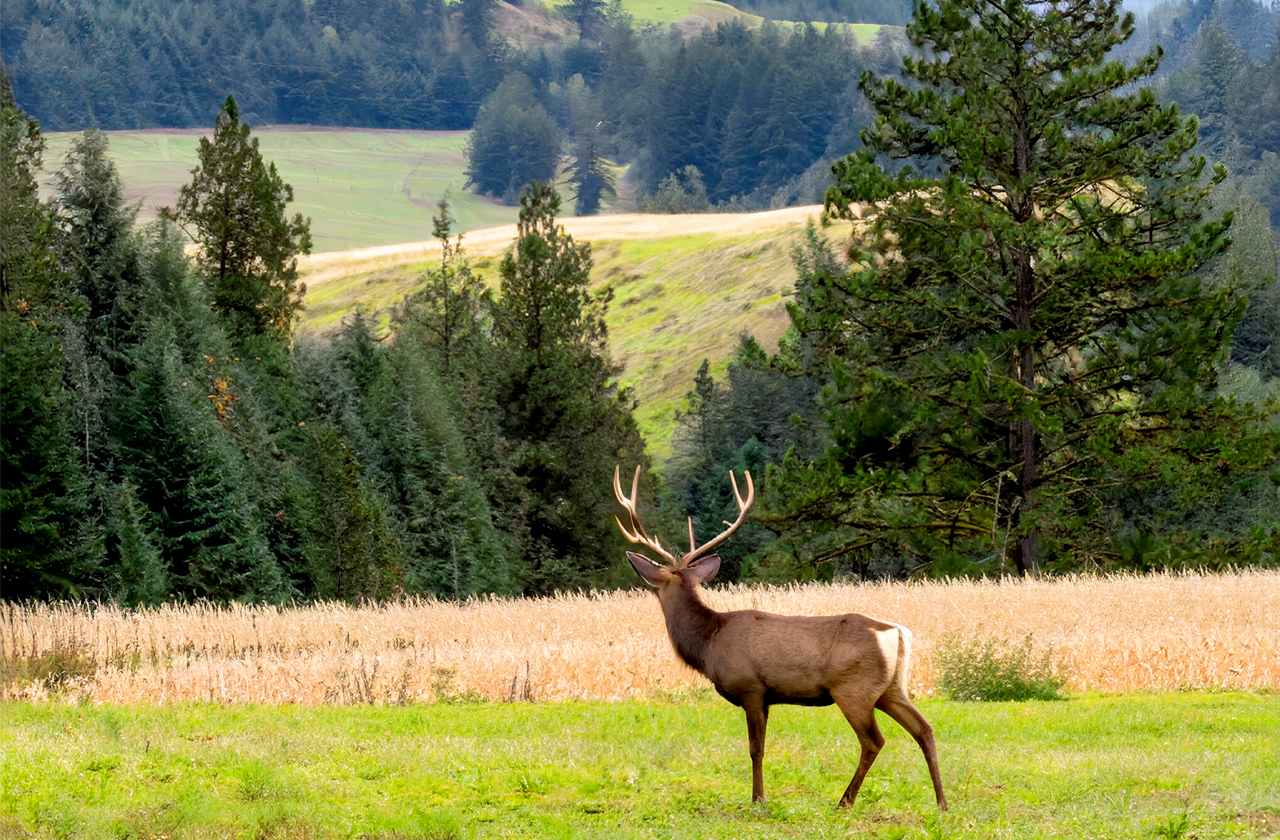
There are plenty of hunting possibilities in Oregon, with a variety of species to choose from, including bear, cougar, deer, elk, pronghorn, bighorn sheep, turkey, waterfowl, and upland game birds. There are designated zones, with distinct rules and limitations for each. This page provides you with a thorough overview of all the things you need to know for your outdoor journey.
- The dates of the season.
- The types of game that can be taken.
- Licenses fees and regulations that apply to hunters.
Oregon Hunting Season
🦌 Big Game Hunting
Deer Seasons
| Season Type | Dates | Tag Required | Deadline |
|---|---|---|---|
| Western Oregon Rifle (Any Legal Weapon) | Oct 4 – Nov 7, 2025 | General Any Legal Weapon Western Oregon Tag | Oct 3 |
| Western Oregon Archery | Aug 30 – Sept 28, 2025 | General Archery Season Western Oregon Tag | Aug 29 |
| Eastern Oregon Archery | Controlled hunts only | Controlled Hunt Application | May 15 |
Elk Seasons
| Season Type | Dates | Tag Required | Deadline |
|---|---|---|---|
| West Cascade (Any Legal Weapon) | Nov 8 – Nov 14, 2025 | General West Cascade Tag | Nov 7 |
| Rocky Mountain (Any Legal Weapon, 2nd Season) | Nov 8 – Nov 16, 2025 | General Eastern Oregon Rocky Mountain 2nd Season Tag | Nov 7 |
| Coast Bull Elk (Any Legal Weapon – 1st Season) | Nov 15 – Nov 18, 2025 | Western Oregon Coast Season Tag (1st) | Nov 14 |
| Coast Bull Elk (Any Legal Weapon – 2nd Season) | Nov 22 – Nov 28, 2025 | Western Oregon Coast Season Tag (2nd) | Nov 21 |
| Western/Eastern Archery | Aug 30 – Sept 28, 2025 | General Archery Season Tag | Aug 29 |
Note: Some Eastern Oregon units are controlled-only for archery elk.
Bear & Cougar
| Species | Dates | Tag Required | Deadline | Notes |
|---|---|---|---|---|
| Black Bear | Aug 1 – Dec 31, 2025 | General Season Fall Tag | Oct 3 | Additional tags available |
| Cougar | Jan 1 – Dec 31, 2025 | General Season Tag | Oct 3 | Additional tags available |
🦃 Turkey Hunting in Oregon
Spring Turkey
| Season | Dates | Bag Limits | Tag Required |
|---|---|---|---|
| Spring Season | Apr 15 – May 31, 2025 | Daily: 1 male/bearded • Season: 3 | Spring Turkey Tag |
| Youth Hunt | Apr 12–13 & Apr 15 – May 31, 2025 | Same as spring | Youth Spring Turkey Tag |
Fall Turkey
| Region | Dates | Bag Limits | Tag Required | Notes |
|---|---|---|---|---|
| Western Oregon (WMUs 14–30) | Sept 1, 2025 – Jan 31, 2026 | Daily: 2 • Season: 2 (either sex) | Fall Turkey Tag | — |
| Eastern Oregon (varies by WMU) | Sept 1 – Nov 30 & Dec 1 – Jan 31, 2026 or Oct 12 – Nov 30 & Dec 1 – Jan 31, 2026 | Daily: 1 • Season: 1 (either sex) | Fall Turkey Tag | Private lands only Dec–Jan |
🦆 Waterfowl Hunting in Oregon
Duck Seasons
| Zone | Dates | Scaup Season | Daily Bag Limit | Special Restrictions |
|---|---|---|---|---|
| Zone 1 | Oct 12 – Oct 27 & Oct 31 – Jan 26, 2025 | Nov 2 – Jan 26, 2025 | 7 ducks | Max: 2 scaup, 2 hen mallards, 1 pintail, 1 harlequin, 2 redheads, 2 canvasbacks |
| Zone 2 | Oct 12 – Dec 1 & Dec 5 – Jan 26, 2025 | Oct 12 – Dec 1 & Dec 5 – Jan 8, 2025 | 7 ducks | Same as above |
Goose Seasons
| Season | Zone | Dates |
|---|---|---|
| September Canada Goose | Northwest Permit Zone | Sept 7 – Sept 15, 2025 |
| Southwest Zone | Sept 7 – Sept 11, 2025 | |
| Eastern Oregon | Sept 7 – Sept 11, 2025 | |
| Regular Goose | Northwest Permit Zone | Oct 19, 2025 – Mar 10, 2026 (segments) |
| Southwest Zone | Oct 12 – Oct 27 & Nov 5 – Jan 26, 2025 | |
| South Coast Zone | Oct 5, 2025 – Mar 10, 2026 (segments) |
Bag limits vary by zone and goose species.
Special Waterfowl Hunts
| Hunt | Dates |
|---|---|
| Youth Hunt | Sept 28–29, 2025 |
| Veterans & Active Military | Feb 1, 2025 |
🐦 Upland Game Bird Hunting
| Species | Dates | Daily Bag Limit | Possession Limit | Notes |
|---|---|---|---|---|
| Ruffed & Blue Grouse | Sept 1, 2024 – Jan 31, 2025 | 3 of each | 9 of each | — |
| Chukar & Hungarian Partridge | Oct 12, 2024 – Jan 31, 2025 | 8 | 24 | Special limits at Lower Klamath Hills |
| Rooster Pheasant | Oct 12 – Dec 31, 2024 | 2 | 8 | — |
| Quail (Western Oregon) | Sept 1, 2024 – Jan 31, 2025 | 10 | 30 | — |
| Quail (Eastern Oregon) | Oct 12, 2024 – Jan 31, 2025 | 10 (max 2 mountain) | 30 (max 6 mountain) | — |
| Sage-Grouse (Controlled Hunt) | Sept 7 – 15, 2024 | 2 (season limit) | — | By permit only |
🦊 Furbearer Hunting & Trapping
| Species | Dates | Open Areas | Notes |
|---|---|---|---|
| Bobcat | Dec 1 – Feb 28 | Statewide | Bag limits apply in Eastern Oregon |
| Fox | Oct 15 – Feb 28 | Statewide | — |
| Marten | Nov 1 – Jan 31 | East of I-5 | — |
| Muskrat/Mink | Nov 15 – Mar 31 | Statewide | — |
| Raccoon | Nov 15 – Mar 15 | Statewide | — |
| River Otter | Nov 15 – Mar 15 | Statewide except closed beaver areas | — |
| Beaver | Nov 15 – Mar 15 | Check regulations | — |
| Badger, Coyote, Nutria, etc. | Year-round | Statewide | No bag limits |
🐿️ Small Game Hunting
| Species | Region | Dates | Notes |
|---|---|---|---|
| Western Gray Squirrel | Western Oregon | Sept 1 – Nov 15, 2025 | — |
| White River, Hood, Paulina, Metolius, Upper Deschutes Units | Sept 15 – Oct 31, 2025 | — | |
| Unprotected Mammals | Statewide | Year-round | Includes badger, coyote, gopher, mole, nutria, porcupine, skunk, weasel, etc. • No bag limits |
Pricing of Licenses for Hunting
Hunting in Oregon is legal only for those who have a valid hunting license.
Birds, small game, and other vulnerable species do not need a license, although hunters under the age of 11 must.
| License Category | Fees For Non-resident | Fees For Resident |
|---|---|---|
| (Hunting) | USD 172.00 | USD 34.50 |
| (Black Bear) | USD 16.50 | USD 16.50 |
| (Cougar) | USD 16.50 | USD 16.50 |
| (Deer) | USD 443.50 | USD 28.50 |
| (Elk) | USD 588.00 | USD 49.50 |
| (Bighorn Sheep) | USD 1,513.50 | USD 142.00 |
| (Pronghorn Antelope) | USD 395.50 | USD 51.50 |
| Youth Hunting (between 12-17 years old) | USD 10.00 | USD 10.00 |
| (Sr. Hunting) | Not Applicable | USD 22.00 |
Please be aware that the targeted species may need an extra tag price.
Hunting Regulations
Vehicles, Aircraft, ATVS, Boats, Drones: Hunting activities that use vehicles, aircraft, ATVs, boats, or drones in a harmful way to animals are illegal. Hunting, trapping, or fishing from a motorized vehicle, using drones for these activities, or operating a motorized vehicle in violation of regulations is prohibited. Firearms and bows must be unloaded while riding a snowmobile or ATV, except for authorized individuals. Shining a bright light on game mammals, predatory animals, or cattle while armed and from a moving vehicle or within 500 feet of a moving vehicle is also illegal. Shooting game animals from a moving speedboat or sailboat is prohibited.
Ban of Parts: Hunters and outdoor enthusiasts must follow laws regarding the import and ownership of parts of deer, elk, moose, and caribou (cervids). Only certain parts, such as boned meat without spinal column or head, hides, antlers, and taxidermy heads, are allowed to be imported and owned. If these regulations are not followed, the offending parts may be confiscated and the person may face charges for disposal.
(CWD) Chronic Wasting Disease: Chronic Wasting Disease (CWD) is a transmissible spongiform encephalopathy that can affect deer, elk, and moose. Although Oregon is not yet affected, the disease is a concern. The disease can spread through nose-to-nose contact, saliva, urine, and feces, so hunters should handle infected animals with care by wearing gloves, avoiding flesh and brain/spinal cord material, and avoiding disease-positive meat. Online resources can help hunters identify and avoid areas prone to CWD.
Illegal Activities: Engaging in unlawful activities in the realm of wildlife includes actions like submitting animals without the right permits or tags, avoiding inspections of equipment used for capturing animals, disrupting licensed traps or snares, tampering with approved signs from wildlife authorities, providing false information to the Department or Commission, and acquiring or owning wildlife through illegal methods with the intention of making a profit.
Disguising Sex, Waste, Sale: It is illegal to disguise the species of wildlife, possess the meat or carcass of deer, elk, antelope, sheep, or goat without evidence of sex, waste any game mammals or edible portions, and sell or exchange any game mammal or parts unless specified by Oregon Administrative Rule 635, Division 200. Proof of sex for deer, elk, antelope, sheep, and goat must be either the head or antlers/horns (Option 1) or reproductive organ attached to meat (Option 2). Hunters must retrieve all crippled or killed wildlife immediately and cannot waste game mammals.
Tagging: Tagging of game mammals is done either through paper tags or electronic tags. Hunters must choose one of these options when purchasing tags. For paper tags, the tag must be signed, validated immediately after harvest by writing the date, time and location of harvest, and securely attached to the game mammal in plain sight. Electronic tags must be validated through the MyODFW mobile app, and the tag owner’s information, harvest date, and confirmation number must be written in ink and attached to the game mammal. Both types of tags must be kept legible and maintained with the carcass or parts at all times. Unsigned or resized tags are unlawful.
Transportation & Possession: Transferring game mammals requires a written record documenting the animal’s description, the original hunter’s identity, tag information, and harvest time. Game mammals must be tagged by the ODFW or State Police after 48 hours post the hunting season. Possession and transportation of game mammals without a valid tag, or parts of a game animal that was illegally killed or obtained humanely, is prohibited. The sale, lending, or borrowing of big game tags is illegal, and possessing the horns of bighorn sheep or Rocky Mountain goat that were not taken legally is not allowed. Transportation of a game animal that was found dead or killed humanely requires approval from the ODFW or Oregon State Police.
Illegal Methods: It is illegal to hunt with dogs (excluding western gray squirrels), use night vision or electronic sights, artificial lights (excluding raccoon, bobcat, and opossum), traps or snares, or hunt for someone else. Additionally, the use of commercial cervid attractants derived from cervid urine is prohibited, and hunting from or across public roads, road right-of-way, or railway right-of-way is not allowed, except on roads closed to motor vehicle use. Finally, the use of any poison, immobilizing, or tranquilizing drugs or chemicals to hunt or kill game mammals is illegal.
Trespassing: Entering someone’s land without permission is against the law. Being on private property without the owner’s consent is not justified even if the purpose is to find and protect game.
Restriction: Restrictions on the use of centerfire rifles for deer and elk require possessing a valid tag for deer, elk, antelope, sheep, or goat in the specific area and on the designated dates. Engaging in this activity within closed wildlife refuges, city or town limits, public parks, cemeteries, or school/college/university grounds is against the law. Additionally, participating in party activities related to this is not allowed, and every individual must have their own unused tag.
FAQ
What firearms are allowed during the deer and elk hunting season in Oregon?
During the deer and elk season, only centerfire rifles are allowed in the Wildlife Management Units listed in the Centerfire Rifle Restrictions table. You must also have an unused or valid deer, elk, pronghorn antelope, bighorn sheep, or Rocky Mountain goat tag for the dates and area being hunted.
Is it legal to hunt on private property without permission from the landowner in Oregon?
Yes, it is illegal to hunt on private property without permission from the landowner according to ORS 105.700 and 498.120.
Are electronic sights and devices allowed during hunting in Oregon?
No, the use of night vision or electronic sights and devices is not permitted, except for trail cameras. Artificial lights for certain animals like raccoons, bobcats, and opossums are allowed, but they must not be attached to or cast from a motor vehicle.
Is party hunting allowed?
No, it is illegal in Oregon. Each hunter must have an unused tag to hunt a game mammal that requires one.
Is it legal to use commercial cervid attractants during hunting in Oregon?
Using or having commercial cervid attractants that contain or come from cervid urine is against the law, as defined in the Oregon Hunting and Fishing Regulations book.
Can I hunt on a public road, road right-of-way, or railway right-of-way in Oregon?
No, it is prohibited to engage in activities on public roads, road right-of-ways, or railway right-of-ways, except on roads that are closed to motor vehicle use.
What are the penalties for violating hunting laws in Oregon?
Consequences for breaking laws related to wildlife activities differ depending on the type and seriousness of the offense. Penalties may include fines, suspension of licenses, or imprisonment.

- Utah Hunting EXPO 2026: Complete Event Guide, Dates & 200 Premium Permit Detail - February 15, 2026
- 2026 Maine Fishing Laws and Regulations for Freshwater Anglers - February 9, 2026
- 2025-2026 Utah Hunting Seasons New Regulations & Dates! - October 3, 2025