Montana remains one of the best hunting states in the West because it offers a little bit of everything. You have classic mule deer and elk country, broad prairie for antelope and upland birds, mountain bear habitat, and huge public-land options that keep DIY hunting alive.
For many hunters, the draw is variety. A single season can include archery elk in September, pheasants and grouse in the fall, late deer during the general rifle season, and waterfowl when cold weather starts pushing birds into the state. Popular species include deer, elk, black bear, turkey, ducks, geese, pheasants, grouse, and a long list of other legal game depending on district and license.
Public access is another big reason Montana stays so popular. National forests, BLM ground, wildlife management areas, school trust lands, and the Block Management Program give hunters millions of acres to work with. That said, access in Montana is never something you should assume. Landlocked public parcels, walk-in rules, and district-specific restrictions can completely change a hunt.
Licensing is where beginners usually get tripped up. Montana uses a mix of over-the-counter licenses, combination licenses for nonresidents, district permits, B licenses, and shoulder-season opportunities. That is exactly why checking annual regulations matters. Dates, quotas, special closures, district rules, and access conditions can shift even when the season framework looks familiar.
Montana Hunting Season Overview
| Category | Details |
|---|---|
| Licensing Requirement | Conservation license + base hunting license, plus species license/tag |
| Main Game Species | Deer, elk, black bear, turkey, ducks, geese, pheasant, grouse |
| Public Hunting Areas | National forests, BLM lands, WMAs, school trust lands, Block Management Areas |
| Online Harvest Reporting | Species-dependent; mandatory for black bear and several furbearers, not universal for deer/elk |
| Youth Hunting Opportunities | Youth deer hunt, youth waterfowl weekend, reduced-fee resident youth licenses |
| Public Land Programs | Block Management, Access Public Lands, Unlocking Public Lands |
| Hunter Education Requirement | Required for anyone born after Jan. 1, 1985, unless hunting as an apprentice |
| Bowhunter Education Requirement | Required for archery license buyers unless prior proof is accepted |
Montana’s big picture is simple: buy the base licenses first, match the right species tag to the right hunting district, and then read the district notes. Many “statewide” opportunities still change at the local level.
Big Game Hunting Seasons
Montana’s big-game structure is built around archery, a general rifle season, district permits, and a few special opportunities like youth deer hunting, backcountry dates, and shoulder seasons.
Deer Hunting Season
| Season Type | Dates | Bag Limit | Notes |
|---|---|---|---|
| Archery | Sept. 5 – Oct. 18, 2026 | One deer on a general deer license; B licenses are additional where valid | District rules still control species/sex |
| Firearms (General) | Oct. 24 – Nov. 29, 2026 | One deer on general license | Mule deer buck opportunities may require district permit |
| Muzzleloader | Dec. 12 – Dec. 20, 2026 | District-specific | Limited heritage muzzleloader opportunities |
| Youth Hunt | Oct. 15 – Oct. 16, 2026 | Deer only | Statewide youth deer hunt |
| Special Hunts | Shoulder seasons Aug. 15 – Feb. 15; backcountry HDs 150, 280, 316 general Sept. 15 – Nov. 29 | License-specific | Shoulder seasons vary by district |
Montana deer hunting is not really “one-size-fits-all.” A general deer license is valid for one deer, but district permits and B licenses can expand or limit opportunity. Antlerless deer are commonly managed through Deer B licenses, and some of those are tied to private land or a specific region. In some hunting districts, a permit is what opens mule deer buck opportunity rather than giving you an extra deer.
Deer Hunting Rules
| Regulation | Requirement |
|---|---|
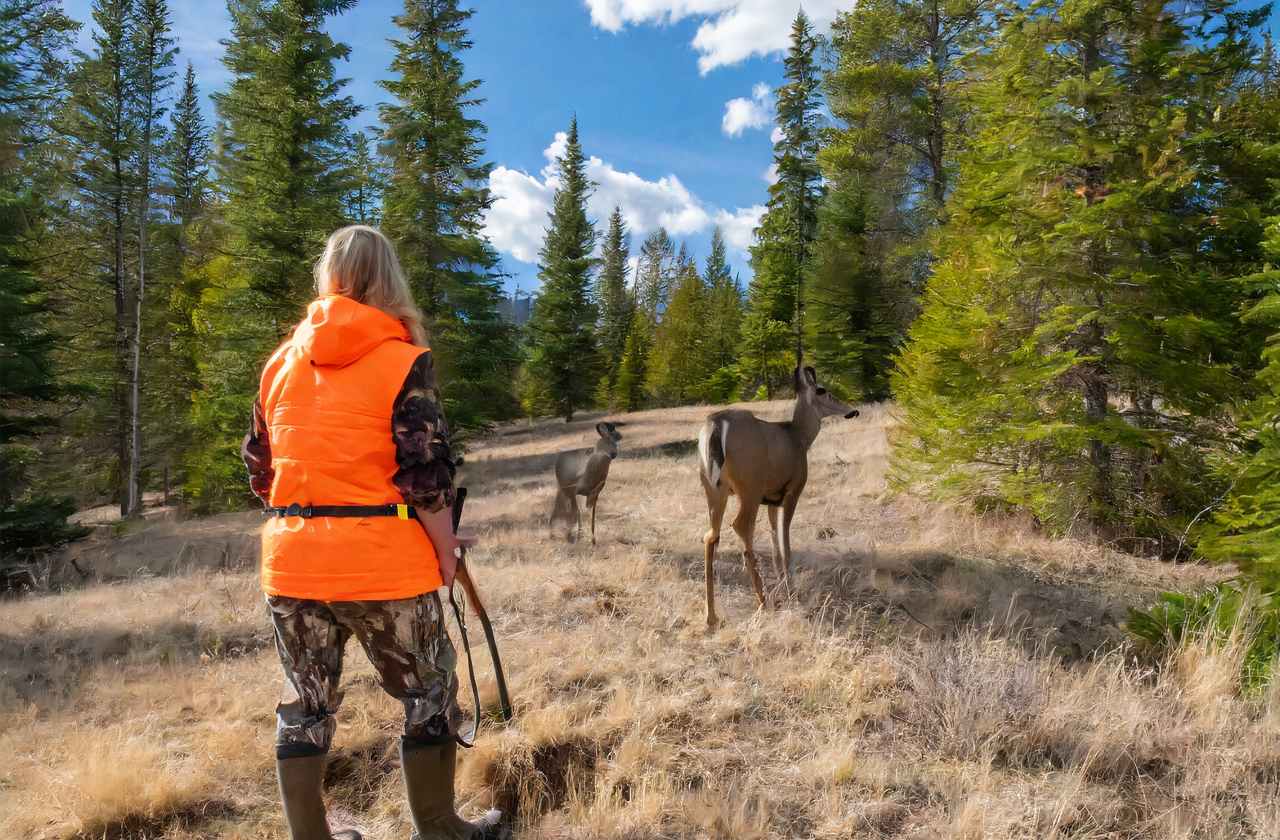
| Hunter Orange | Minimum 400 square inches above the waist during firearm seasons |
| Legal Weapons | Rifles, handguns, shotguns with slugs/0/00, muzzleloaders, bows, and crossbows |
| Reporting Deadline | No statewide post-harvest deadline; validate tag before leaving kill site |
| Baiting Rules | Baiting and salt licks are illegal |
| Tagging Requirements | Validate electronically or cut date immediately; tag stays with carcass |
What to know:
- Deer zones and districts: Montana manages deer by hunting district, not by a simple east/west split. Always check the exact HD before hunting.
- Antler restrictions: Mule deer buck opportunity can depend on a district permit. Antlerless whitetail chances are often handled through B licenses.
- Reporting: Deer hunters do not have a universal online reporting deadline, but they do have immediate tagging and check-station obligations.
- Special opportunities: Shoulder seasons can create extra antlerless opportunity in select areas, especially where herd numbers are above objective.
Elk Hunting Season
| Season | Dates | Permit Type |
|---|---|---|
| Archery | Sept. 5 – Oct. 18, 2026 | General elk license or district permit |
| General | Oct. 24 – Nov. 29, 2026 | General elk license; permits expand bull/either-sex options |
| Shoulder Seasons | Aug. 15, 2026 – Feb. 15, 2027 | Antlerless-focused, district-specific |
| Muzzleloader | Dec. 12 – Dec. 20, 2026 | Limited district opportunity |
| Backcountry HDs 150, 280, 316 | Sept. 15 – Nov. 29, 2026 | District-specific |
Montana elk rules revolve around the difference between a general license and a permit. The general license is your core elk tag. A permit does not give you another elk; it expands what you may hunt in a certain district, such as bull, antlerless, or either-sex opportunity. Residents buy general elk over the counter, while most nonresidents need an elk or big game combination through the draw.
Bear Hunting Season
| Season | Dates | Unit/Zone |
|---|---|---|
| Spring | Apr. 15 – May 31 or June 15, 2026 | Varies by bear management unit |
| Archery | Sept. 5 – Sept. 14, 2026 | Statewide framework; district rules apply |
| Fall | Sept. 15 – Nov. 29, 2026 | Varies by BMU |
| Hound Training | May 26 – June 15, 2026 | Where allowed |
Black bear is one of the most quota-sensitive hunts in Montana. Some BMUs close when quotas are reached or approached, and a few spring units can shut down if female harvest thresholds are hit. Successful hunters must report a harvest within 48 hours. Region 1 uses tooth submission, while Regions 2-7 generally require hide and skull inspection within 10 days.
Turkey Hunting Seasons
Montana turkey hunting is better than many first-time visitors expect, especially in Regions 1, 2, 5, and 7. The state allows a surprising amount of turkey opportunity through stacked regional and special licenses.
Spring Turkey Season
| Season | Dates | Bag Limit |
|---|---|---|
| Youth Hunt | No separate statewide youth-only turkey season published | Youth may hunt under standard youth/apprentice rules |
| Regular Season | Apr. 15 – May 31, 2026 | One male turkey per valid spring license |
Fall Turkey Season
| Season | Dates | Bag Limit |
|---|---|---|
| Archery | Sept. 1, 2026 – Jan. 1, 2027 | One turkey per valid fall license |
| Firearms | Sept. 1, 2026 – Jan. 1, 2027 | One turkey per valid fall license |
Turkey Hunting Regulations
| Rule | Requirement |
|---|---|
| Shotgun Restrictions | Shotgun not larger than 10 gauge |
| Hunter Orange Requirement | Not required, but strongly recommended |
| Legal Hunting Hours | 1/2 hour before sunrise to 1/2 hour after sunset |
| Youth Requirements | Apprentice option for ages 10+; full youth hunting eligibility begins with Montana age rules |
A turkey hunter may hold multiple turkey licenses in Montana, and the mix of general, regional, and female/beardless licenses can raise annual opportunity a lot. Spring hunting is male-only under the standard framework, while fall licenses in many regions allow either-sex harvest.
Waterfowl Hunting Seasons
Montana waterfowling is split by flyway and zone, not by a simple north-central-south map. To make it easier to read, the tables below convert the state framework into a practical regional format.
Duck Seasons
| Zone | Dates |
|---|---|
| North/West (Pacific Flyway) | Oct. 3 – Dec. 27, 2026, and Dec. 28, 2026 – Jan. 15, 2027 |
| Central (Central Flyway Zone 1) | Oct. 3, 2026 – Jan. 7, 2027 |
| South/East (Central Flyway Zone 2) | Oct. 3 – Oct. 11, 2026, and Oct. 24, 2026 – Jan. 19, 2027 |
Goose Seasons
| Zone | Dates |
|---|---|
| North/West (Pacific Flyway) | Oct. 3, 2026 – Jan. 15, 2027 |
| Central (Central Flyway Zone 1) | Oct. 3, 2026 – Jan. 15, 2027 |
| South/East (Central Flyway Zone 2) | Oct. 3 – Oct. 11, 2026, and Oct. 24, 2026 – Jan. 27, 2027 |
Special Waterfowl Hunts
| Hunt Type | Dates |
|---|---|
| Youth Waterfowl | Sept. 26 – Sept. 27, 2026 |
| Veteran Waterfowl | No separate statewide veteran-only hunt posted |
| Early Teal | No standalone teal season; extra blue-winged teal allowed early in Central Flyway regular season |
Waterfowl Requirements
| Requirement | Details |
|---|---|
| HIP Registration | Required before buying migratory bird license |
| Federal Duck Stamp | Required for waterfowl hunters age 16+ |
| State Stamp | No separate state duck stamp; buy Montana Migratory Bird License |
Small Game Hunting Seasons
Montana’s small-game menu is strong for upland birds, but not every species in the generic “small game” lists used by other states has a Montana season.
| Species | Season Dates | Daily Limit |
|---|---|---|
| Squirrel | No general statewide season listed | N/A |
| Rabbit | No general statewide season listed | N/A |
| Pheasant | Oct. 10, 2026 – Jan. 1, 2027 | 3 cock pheasants |
| Quail | No general statewide season listed | N/A |
| Grouse | Sept. 1, 2026 – Jan. 1, 2027 | 3 mountain grouse aggregate; 4 sharp-tailed; sage grouse 2 |
| Dove | Sept. 1 – Oct. 30, 2026 | 15 |
| Woodcock | No general statewide season listed | N/A |
| Snipe | Sept. 1 – Dec. 16, 2026 | 8 |
Regional note: Nonresidents hunting upland birds on public land or access-program land often start later than residents for several species. Sage grouse also requires a free supplemental permit.
Furbearer Hunting and Trapping Seasons
FWP usually posts the full furbearer booklet in August. The dates below reflect the latest seasons shown on the current FWP furbearer page.
| Species | Dates | Notes |
|---|---|---|
| Coyote | Year-round | Predator shooting; no FWP shooting license |
| Fox | No statewide season listed on current page | Check new furbearer booklet |
| Raccoon | No statewide season listed on current page | Check new furbearer booklet |
| Opossum | No statewide season listed on current page | Check new furbearer booklet |
| Beaver | TD 1-3: Nov. 1 – Apr. 15; TD 4-7: Sept. 1 – May 31 | Trapping only |
| Bobcat | TD 1-3: Dec. 1 – Feb. 15; TD 4-7: Dec. 1 – Mar. 1 | May close early on quota |
| Otter | Nov. 1 – Apr. 15 | Quota species |
Trapping rules: Bobcat, otter, swift fox, fisher, wolf, and marten harvests must be reported within 24 hours, with pelt tagging/inspection generally due within 10 days after season close.
Additional Hunting Opportunities
| Species | Season Dates |
|---|---|
| Crow | No general statewide season listed in current 2026 booklets |
| Frog | No general statewide season listed |
| Turtle | No general statewide season listed |
| Other Legal Species | Predators such as coyote, weasel, striped skunk, and spotted skunk may be shot year-round |
Hunting Licenses and Fees
License year: Montana’s hunting license year runs roughly March 1 through the last day of February.
Resident License Fees
| License Type | Fee |
|---|---|
| Conservation License | $8 |
| Base Hunting License | $10 |
| General Deer | $16 |
| General Elk | $20 |
| Turkey | $6.50 |
| Migratory Bird License | $10 (ages 18+) |
| State Waterfowl Stamp | No separate stamp |
| Trapping License (General Trapper) | $20 |
Nonresident License Fees
| License Type | Fee |
|---|---|
| Conservation License | $10 |
| Base Hunting License | $50 |
| General Deer Combination | $760 |
| General Elk Combination | $1,112 |
| General Big Game Combination | $1,312 |
| Turkey | $115 |
| Migratory Bird License | $150 |
| State Waterfowl Stamp | No separate stamp |
| Nonresident Trapper | $250 |
Youth and Senior Licenses
| License Type | Fee |
|---|---|
| Resident Youth Conservation License | $4 |
| Resident Youth General Deer | $8 |
| Resident Youth General Elk | $10 |
| Resident Senior Conservation License (62+) | $4 |
| Resident Senior General Deer | $8 |
| Apprentice Option | No separate “license” fee published; normal license costs still apply |
Hunter Education Requirements
| Requirement | Details |
|---|---|
| Minimum Age | 10 to start hunter education |
| Hunter Safety Course | Required for anyone born after Jan. 1, 1985 |
| Apprentice Option | Available for hunters age 10+ for up to two years with mentor |
| Online Course Availability | Yes; adults 18+ may complete fully online, ages 12-17 need online + field day |
Bowhunters also need bowhunter education or proof of prior bowhunting experience before buying a Montana bow-and-arrow license.
Public Hunting Land
Montana offers more than 30 million acres of state and federal land, plus Block Management access on private ground.
Major Public Hunting Areas
| Area Name | Acres | Popular Species |
|---|---|---|
| Spotted Dog WMA | 38,000 | Deer, elk, upland birds |
| Warm Springs WMA | 4,700 | Waterfowl, deer |
| Montana State Prison Ranch | 23,000 | Big game, upland birds |
Wildlife Management Areas are free to hunt with valid licenses, but access, camping, and vehicle rules vary by site. School trust lands can be huntable too, though many require a state recreational use license. National forests and BLM parcels provide huge opportunity, but legal access still matters because crossing private land without permission remains trespass.
Special Hunting Programs
| Program | Description |
|---|---|
| Walk-In Access | Block Management Type I areas with simple sign-in rules |
| Private Land Access | Block Management and landowner agreements |
| Youth Hunts | Youth deer and youth waterfowl weekends |
| Draw Hunts | District permits, nonresident combination licenses, many B licenses |
Montana’s Block Management Program remains one of the state’s best tools for DIY hunters, with about 6.8 million acres enrolled in the latest published figures.
Important Hunting Regulations
| Regulation | Requirement |
|---|---|
| Hunter Orange | Required for firearm big-game hunting |
| Trespassing | Permission required on all private land |
| Baiting | Illegal for game animals and game birds |
| Drones | Cannot be used to spot or assist same-day hunting |
| Spotlighting | Projected artificial light cannot be used to take game |
| Party Hunting | Each hunter must tag their own animal |
| Road Hunting | No hunting on, from, or across public roads/right-of-way |
| Suppressors | Not generally prohibited under standard firearm rules; check special seasons |
Hunting Hours
| Species | Legal Hunting Hours |
|---|---|
| Deer | 1/2 hour before sunrise to 1/2 hour after sunset |
| Turkey | 1/2 hour before sunrise to 1/2 hour after sunset |
| Waterfowl | 1/2 hour before sunrise to sunset |
| Small Game | Generally daylight frameworks; check species booklet |
Harvest Reporting Requirements
| Species | Reporting Deadline |
|---|---|
| Deer | Validate tag before leaving kill site |
| Turkey | Validate tag before leaving kill site |
| Bear | Report within 48 hours; inspection/tooth submission within 10 days |
| Elk | Validate tag before leaving kill site |
Penalties for Hunting Violations
| Violation | Possible Penalty |
|---|---|
| Hunting Without License | Misdemeanor penalties, possible fines, license suspension |
| Trespassing | Criminal/civil penalties plus hunting consequences |
| Exceeding Bag Limits | Fines, restitution, loss of privileges |
| Illegal Harvest | Fines, jail exposure, restitution for wildlife value |
| Failure to Report Harvest | Citation, confiscation risk, added penalties |
In Montana, many fish and game violations are misdemeanors that may bring fines, possible jail time, restitution, and suspension of hunting privileges. Serious trophy-animal cases can get much more expensive than a simple citation.
Montana Hunting Tips for the 2026-2027 Season
- Learn your hunting district number before you ever leave home; Montana rules are district-driven.
- Check shoulder season maps separately from general elk season dates.
- If you are a nonresident bird hunter, watch the delayed public-land opener on some upland species.
- Carry enough hunter orange for rifle season even if you started the month bowhunting.
- If you plan a bear hunt, save the quota phone number and check closures daily.
- On deer and elk hunts, plan your CWD carcass disposal before you load the truck.
- Use Block Management correctly; Montana landowners notice who signs in and who does not.
- For school trust lands, confirm whether you need the state recreational use license first.
- Do not assume a mule deer buck is legal on a general tag in every district.
- Turkey hunters should study the regional license stack because that is where extra opportunity hides.
- Waterfowl hunters in eastern Montana should know whether they are in Central Zone 1 or Zone 2 before opening morning.
- If you are trapping or hunting bobcat/otter, build the 24-hour reporting rule into your plan.
Frequently Asked Questions
Do nonresidents need to draw deer and elk licenses in Montana?
Usually yes. Most nonresidents hunt on deer, elk, or big game combination licenses awarded through a drawing.
Is Montana deer hunting over the counter for residents?
Yes, resident general deer and elk licenses are generally over the counter.
Are shoulder seasons open everywhere?
No. Shoulder seasons are only open in selected districts with specific dates and rules.
Do I need hunter education in Montana?
Yes, if you were born after Jan. 1, 1985, unless you are legally hunting as an apprentice.
Is there a separate Montana duck stamp?
No. Montana uses a migratory bird license, while waterfowl hunters 16 and older also need the federal duck stamp.
Can I hunt private land in Montana if it is not posted?
No. Permission is required on all private land.
Does Montana allow baiting for deer or elk?
No. Baiting game animals is illegal.
Is there a youth deer season?
Yes. Montana has a two-day statewide youth deer hunt on Oct. 15-16, 2026.
Are there good public-land options for beginners?
Yes. National forests, WMAs, BLM parcels, and Block Management areas provide plenty of starter opportunities.
Can I use a drone to scout animals before a hunt?
Not for hunting assistance. Montana prohibits using aircraft or drones to spot game for hunting within the restricted timeframe.
Final Thoughts
Montana still offers one of the most complete hunting calendars in the country. Deer, elk, black bear, turkey, waterfowl, upland birds, predators, and trapping opportunities all fit into a long season that starts early and often runs deep into winter.
The big advantage in Montana is access. Between national forests, BLM lands, wildlife management areas, and millions of acres in Block Management, a hunter willing to plan ahead can still build a very good DIY season without relying on private leases.
The flip side is complexity. Montana can look simple from a distance, but district permits, B licenses, shoulder seasons, quota closures, and access rules make it a state where reading the current booklets really matters. A legal animal in one district may be off-limits in the next.
Licenses also need extra attention, especially for beginners and nonresidents. Start with the conservation license and base hunting license, then match the correct species license or combination to your hunt plan. For waterfowl, remember the extra federal duck stamp requirement.
Finally, keep safety front and center. Wear orange when required, avoid road hunting mistakes, respect private-land boundaries, and tag animals immediately. Before any 2026-2027 hunt, verify the latest district rules, quotas, closures, and access updates with Montana Fish, Wildlife & Parks.
This guide was checked against the latest season books, license pages, and access information published by Montana Fish, Wildlife & Parks, plus current federal duck stamp guidance from U.S. Fish & Wildlife Service. For hunters comparing multiple states, this state-by-state hunting seasons guide is also useful.

- 2026-2027 Nevada Hunting Seasons New Dates & Regulations - August 13, 2026
- NC Turkey Season 2026 New Dates & Rules - July 23, 2026
- Thrilling 2026-2027 NM Elk, Deer And Pronghorn Season! - July 23, 2026