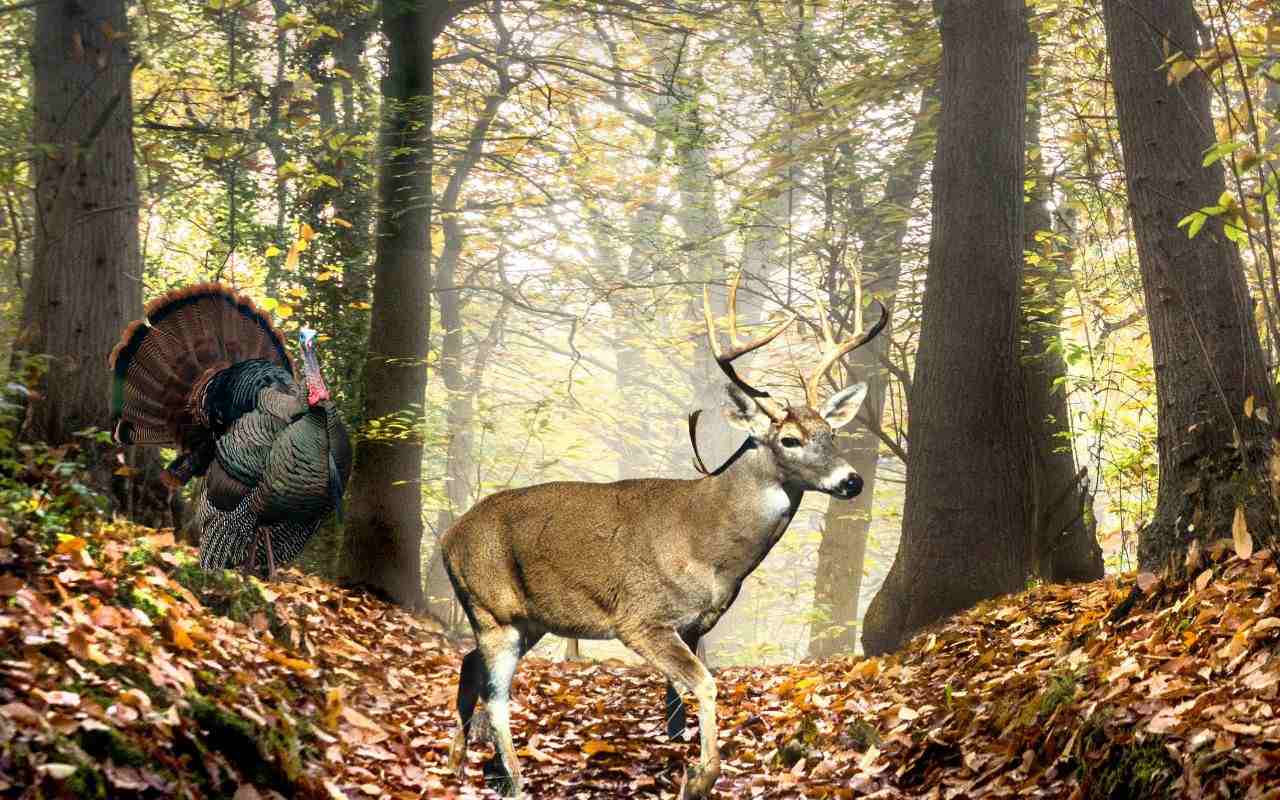
Virginia gives hunters a little bit of everything. You can chase whitetails in farm country, hunt mountain bear in the western counties, call spring gobblers almost statewide, and still have solid opportunities for squirrels, rabbits, doves, ducks, and furbearers. That range is what keeps Virginia interesting for both seasoned hunters and first-time license buyers.
Whitetail deer remain the headline species, but they are far from the only draw. Turkey hunting is strong, black bear opportunities are real in the right counties, and migratory bird seasons add a full second half to the hunting calendar. On top of that, Virginia’s mix of WMAs, national forests, state forests, reservoirs, and access programs gives hunters room to move.
Public-land hunting is one of Virginia’s biggest strengths. From the George Washington and Jefferson National Forests to large WMAs and private-land access programs, hunters can find room for mountain hunts, small-game walks, and late-season scouting trips without needing a private lease.
Licensing is straightforward, but hunters still need to pay attention. Deer/turkey licenses, bear licenses, HIP registration, the Virginia waterfowl stamp, and the federal duck stamp can all come into play depending on the species. That is why reviewing the annual rules matters. Even small changes—like turkey bag-limit updates or county-specific deer and bear rules—can affect a legal hunt.
Virginia Hunting Season Overview
| Category | Details |
|---|---|
| Licensing Requirement | Basic hunting license required unless exempt; add deer/turkey, bear, waterfowl, or trapping privileges as needed |
| Main Game Species | Deer, turkey, bear, ducks, geese, squirrel, rabbit, dove, coyote, bobcat |
| Public Hunting Areas | WMAs, George Washington & Jefferson National Forests, state forests, Corps lands, PALS access areas |
| Online Harvest Reporting | Required for deer, bear, turkey, elk, bobcat, and gray fox |
| Youth Hunting Opportunities | Special deer, bear, fall turkey, spring turkey, and waterfowl days |
| Public Land Programs | WMA system, PALS, POWRR, quota/lottery hunts, managed park hunts |
| Hunter Education Requirement | Required for ages 12–15 and first-time regular license buyers unless using apprentice option |
Virginia’s rules are fairly hunter-friendly, but they are also highly specific by species, county, and method. That means it is smart to use a season guide like this as your planning tool, then confirm final county details before opening day.
Big Game Hunting Seasons
Virginia big game revolves around deer first, then bear, with a limited elk opportunity through lottery. County-based differences matter most for deer and bear, so always double-check your exact unit before you hunt.
Deer Hunting Season
| Season Type | Dates | Bag Limit | Notes |
|---|---|---|---|
| Youth & Apprentice Deer Hunt | Sept. 26–27, 2026 | Counts toward annual limit | Statewide youth/apprentice opportunity |
| Urban Archery | Sept. 5–Oct. 2, 2026; Jan. 3–Mar. 28, 2027 | By local rules and tags | For approved urban archery areas |
| NOVA Late Archery | Mar. 29–Apr. 25, 2027 | Special local opportunity | Northern Virginia only |
| Early Archery | Oct. 3–Nov. 13, 2026 | Counts toward annual limit | Statewide with local exceptions |
| Early Muzzleloader | Oct. 31–Nov. 13, 2026 | Counts toward annual limit | Blaze-color rules apply |
| Firearms | Varies by county: many areas Nov. 14–Jan. 2; some western counties shorter; Chesapeake/Suffolk/Virginia Beach have earlier structures | Counts toward annual limit | County-specific; verify exact county listing |
| Late Muzzleloader | Dec. 12, 2026–Jan. 2, 2027 | Counts toward annual limit | East and West have this late window |
| Late Archery | Nov. 29/Dec. 1/Dec. 13, 2026–Jan. 2, 2027 depending on area | Counts toward annual limit | End date generally Jan. 2 |
Deer zones, limits, and special rules
Virginia splits deer rules mainly by geography. East of the Blue Ridge, most hunters are working under a 2-deer daily limit and a 6-deer annual limit, with no more than 3 antlered deer. West of the Blue Ridge—and on National Forest lands in Amherst, Bedford, and Nelson—the annual limit is usually 5 deer, with no more than 2 antlered deer.
Antler rules also matter. In Alleghany, Bath, Highland, and Rockbridge counties, if you take two antlered bucks in the same license year, at least one must carry four points on one side, with points at least one inch long. Button bucks count as antlerless deer in Virginia.
Reporting is mandatory. Deer must be tagged before moving the animal and reported at vehicle transport or by the close of hunting hours, whichever comes first. Virginia’s eNotch system and Go Outdoors reporting make this easier than old paper check stations. Hunters interested in more deer-specific planning can also review this Virginia deer season guide.
Virginia also offers useful special opportunities, including urban archery seasons, bonus antlerless permits, and Earn-a-Buck rules in certain counties. In those areas, hunters must first harvest antlerless deer before taking additional bucks on private land.
Deer Hunting Rules
| Regulation | Requirement |
|---|---|
| Hunter Orange | Required during firearms deer season and youth/apprentice deer weekend; archery hunters must wear blaze color during firearms deer season unless in no-firearms areas |
| Legal Weapons | Shotguns, rifles/pistols .23 caliber or larger, muzzleloaders of legal caliber, archery tackle, crossbows, and certain air guns |
| Reporting Deadline | Upon vehicle transport or by end of hunting hours, without unnecessary delay |
| Baiting Rules | Baited hunting is unlawful; bait/salt for deer, bear, or turkey is prohibited year-round on National Forest and DWR lands |
| Tagging Requirements | Validate tag before moving animal; keep confirmation number/personal check card with carcass |
Elk Hunting Season
| Season | Dates | Permit Type |
|---|---|---|
| Virginia Elk Hunt | Oct. 10–16, 2026 | Lottery permit |
Virginia elk hunting is still limited. For 2026–2027, five antlered elk licenses are available by lottery. The application window ran Feb. 1–Mar. 31, 2026. At least one tag must go to a resident of the Elk Management Zone, and no more than one can go to a nonresident.
Bear Hunting Season
| Season | Dates | Unit/Zone |
|---|---|---|
| Youth & Apprentice Bear Hunt | Oct. 10–11, 2026 | Eligible open areas |
| Archery | Mostly Oct. 3–Nov. 13, 2026; some mountain counties begin Oct. 17 | County-specific |
| Muzzleloader | Mostly Nov. 7–13, 2026; some mountain counties Nov. 10–13 | County-specific |
| Firearms | Main windows include Nov. 23–Jan. 2, Nov. 30–Jan. 2, or Nov. 27–29 plus Dec. 21–Jan. 2 depending on county | County-specific |
| City Firearms Opportunity | Oct. 1, 2026–Jan. 2, 2027 | Chesapeake, Suffolk, Virginia Beach incorporated areas |
| Closed Firearms Example | Closed in Accomack and Northampton | Eastern Shore counties |
Bear hunting in Virginia is highly county-driven. The statewide limit is one bear per license year. A legal bear must weigh at least 100 pounds live or 75 pounds dressed, and females with cubs are protected. Successful hunters must report the kill and submit a premolar tooth. Bear baiting is prohibited statewide year-round.
Turkey Hunting Seasons
Virginia turkey hunters should pay special attention this year because the annual bag structure changed. Hunters may now take up to three turkeys per license year in any combination of fall and spring birds, but only one of those may be a beardless turkey taken in fall.
Spring Turkey Season
| Season | Dates | Bag Limit |
|---|---|---|
| Youth & Apprentice Spring Hunt | Apr. 3–4, 2027 | 1 bearded turkey per youth/apprentice hunter |
| Regular Spring Season | Apr. 10–25, 2027; Apr. 26–May 15, 2027 | 1 per day, bearded birds only; max 3 per license year |
Fall Turkey Season
| Season | Dates | Bag Limit |
|---|---|---|
| Archery | Oct. 3–Nov. 13, 2026 | 1 per day; annual limit 3 total turkeys, only 1 beardless |
| Youth & Apprentice Fall Hunt | Oct. 10–11, 2026 | 1 turkey |
| Firearms | Starts Oct. 17, 2026; later segments run into Jan. 23, 2027 depending on county | 1 per day; annual limit 3 total turkeys, only 1 beardless |
Turkey Hunting Regulations
| Rule | Requirement |
|---|---|
| Shotgun Restrictions | During spring turkey, no shot larger than No. 2 fine shot |
| Hunter Orange Requirement | Needed when turkey hunters overlap firearms deer seasons or youth deer weekend rules |
| Legal Hunting Hours | Fall: 1/2 hour before sunrise to 1/2 hour after sunset; Spring: 1/2 hour before sunrise to noon first part, then to sunset in last 20 days |
| Youth Requirements | Youth/apprentice hunters must be directly supervised by an adult 18+; adult may call but may not shoot |
Turkey hunters also need to report all spring and fall harvests promptly. Dogs are allowed in fall turkey seasons, but not for spring turkey except to track wounded or dead birds.
Waterfowl Hunting Seasons
Virginia offers a solid Atlantic Flyway mix of ducks, Canada geese, teal, and light geese. One important note: Virginia does not use simple north/central/south regular duck zones for 2026–2027. Regular duck dates are effectively statewide, while goose rules are split by goose-management zones.
Duck Seasons
| Zone | Dates |
|---|---|
| Statewide Regular Duck Season | Oct. 9–12, 2026; Nov. 18–29, 2026; Dec. 19, 2026–Jan. 31, 2027 |
Goose Seasons
| Zone | Dates |
|---|---|
| Atlantic Population (AP) Canada Goose | Nov. 24–29, 2026; Dec. 24, 2026–Jan. 31, 2027 |
| Resident Population (RP) Canada Goose | Nov. 18–29, 2026; Dec. 19, 2026–Feb. 21, 2027 |
| September Canada Goose | Sept. 1–25, 2026 |
| Light Goose Regular Season | Nov. 25, 2026–Mar. 10, 2027 |
Special Waterfowl Hunts
| Hunt Type | Dates |
|---|---|
| Youth & Veteran Waterfowl Days | Oct. 24, 2026; Feb. 6, 2027 |
| Early Teal | East of I-95: Sept. 19–27, 2026; West of I-95: Sept. 22–27, 2026 |
Waterfowl Requirements
| Requirement | Details |
|---|---|
| HIP Registration | Required every year after July 1 for all migratory bird hunters, even if license-exempt |
| Federal Duck Stamp | Required for all waterfowl hunters age 16+ |
| State Stamp | Virginia Migratory Waterfowl Conservation Stamp required unless exempt |
Virginia’s regular duck bag is 6 daily, but species limits apply within that total. For example, mallards, wood ducks, black ducks, scaup, redheads, canvasbacks, pintails, and sea ducks all have sub-limits. Shooting hours are generally 1/2 hour before sunrise to sunset.
Small Game Hunting Seasons
| Species | Season Dates | Daily Limit |
|---|---|---|
| Gray & Red Squirrel | Sept. 5, 2026–Feb. 28, 2027; spring season June 5–19, 2027 | 6 combined |
| Fox Squirrel | Sept. 5, 2026–Jan. 31, 2027 in designated counties only | Included in 6 combined |
| Rabbit | Oct. 31, 2026–Feb. 28, 2027 | 6 |
| Pheasant | Nov. 7, 2026–Jan. 31, 2027 | No daily limit |
| Quail | Nov. 7, 2026–Jan. 31, 2027 | 6 |
| Grouse | Oct. 24, 2026–Feb. 13, 2027 west of I-95 only | 3 |
| Dove | Sept. 5–Oct. 24; Nov. 21–29; Dec. 19, 2026–Jan. 18, 2027 | 15 |
| Woodcock | Nov. 11–Dec. 1, 2026; Dec. 26, 2026–Jan. 18, 2027 | 3 |
| Snipe | Sept. 28–Nov. 29, 2026; Dec. 19, 2026–Jan. 31, 2027 | 8 |
Regional differences matter here. Grouse are closed east of I-95, quail are closed on public lands west of the Blue Ridge, and fox squirrel opportunities are limited to designated counties and select WMAs.
Furbearer Hunting and Trapping Seasons
| Species | Dates | Notes |
|---|---|---|
| Coyote | Continuous open season | On National Forest and DWR lands, limited to Sept. 1–Mar. 10 plus certain spring openings |
| Red Fox | Nov. 1, 2026–Feb. 28, 2027 | Closed in several counties |
| Gray Fox | Jan. 1–Feb. 28, 2027 | Report within 24 hours |
| Raccoon | Oct. 15, 2026–Mar. 10, 2027 | 2 daily; rules differ east/west of Blue Ridge |
| Opossum | Oct. 15, 2026–Mar. 10, 2027 | Statewide |
| Bobcat | Archery Oct. 3–31, 2026; Firearms Nov. 1, 2026–Feb. 28, 2027 | Report within 24 hours; CITES may apply |
| Beaver (trapping) | Dec. 1, 2026–Feb. 28, 2027 | Continuous urban/city trapping in some places |
| Otter (trapping) | Dec. 1, 2026–Feb. 28, 2027 | West of Blue Ridge season limit 4; CITES rules apply |
Virginia trappers must pay attention to reporting and tagging. Bobcats must be reported within 24 hours, and raw pelts or unskinned carcasses that are sold, traded, or moved out of state can require CITES tagging. Otter pelts transported out of state can require the same.
Additional Hunting Opportunities
| Species | Season Dates |
|---|---|
| Crow | Aug. 15, 2026–Mar. 19, 2027 on Mon/Wed/Fri/Sat; Sept. 2, 2026–Mar. 10, 2027 on National Forest and DWR lands |
| Groundhog | Continuous on private lands |
| Bullfrogs | Daily limit 15 |
| Snapping Turtle | June 1–Sept. 30; daily limit 5; 13-inch minimum curved-line carapace |
Hunting Licenses and Fees
Resident License Fees
| License Type | Fee |
|---|---|
| Annual Hunting License | $23.00 |
| Deer/Turkey License | $23.00 |
| Bear License | $21.00 |
| Waterfowl Stamp | $10.00 |
| Trapping License | $46.00 |
Nonresident License Fees
| License Type | Fee |
|---|---|
| Annual Hunting License | $111.00 |
| Deer/Turkey License | $86.00 |
| Bear License | $151.00 |
| Waterfowl Stamp | $10.00 |
| Trapping License | $206.00 |
Youth and Senior Licenses
| License Type | Fee |
|---|---|
| Resident Junior Hunting License | $8.50 |
| Senior Hunting License | $9.00 |
| Apprentice Hunting License | Resident $11.00 / Nonresident $21.00 |
Virginia also sells multi-year hunting licenses, resident sportsman licenses, county/city licenses, and lifetime options. Most annual hunting-related licenses follow the July 1–June 30 license year.
Hunter Education Requirements
| Requirement | Details |
|---|---|
| Minimum Age | Hunters under 12 may hunt under immediate adult supervision |
| Hunter Safety Course | Required for ages 12–15 and anyone who has not previously purchased a regular hunting license |
| Apprentice Option | Available instead of hunter education for new hunters |
| Online Course Availability | Virginia offers online hunter education for eligible residents |
Apprentice hunters get a useful on-ramp, but they must be directly supervised and should treat the license as a short-term learning option, not a permanent substitute for hunter education.
Public Hunting Land in Virginia
| Area Name | Acres | Popular Species |
|---|---|---|
| Little North Mountain WMA | 17,152 | Deer, turkey, bear, squirrel |
| Goshen WMA | 16,157 | Deer, bear, turkey, small game |
| Gathright WMA | 13,428 | Deer, bear, turkey, squirrel |
| John H. Kerr Reservoir public hunting lands | 40,000 open to hunting | Deer, turkey, waterfowl, small game |
| Coalfields PALS Area | Approx. 30,000 | Deer, bear, turkey, small game |
Virginia’s public access system includes WMAs, national forests, state forests, reservoir lands, and private-land access partnerships. PALS opens selected private lands to public use, while managed state forests and lottery-style hunts expand access in places where pressure would otherwise be too high.
Special Hunting Programs
| Program | Description |
|---|---|
| Walk-In Access | PALS opens enrolled private land to public hunting |
| Private Land Access | POWRR and related access partnerships improve entry and habitat |
| Youth Hunts | Special deer, bear, turkey, pheasant, and waterfowl opportunities |
| Draw Hunts | Quota hunts, state park deer hunts, and lottery permit hunts |
Application details vary. Some hunts are first-come, some are quota-based, and elk or limited deer opportunities use lottery systems.
Important Hunting Regulations
| Regulation | Requirement |
|---|---|
| Hunter Orange | Mandatory during firearms deer seasons and related youth weekends |
| Trespassing | Permission required on all private land; written permission required on posted land |
| Baiting | Illegal from baited sites; year-round bait/salt ban for deer, bear, turkey on DWR and National Forest lands |
| Drones | Cannot hunt the same day on the same property where a drone was used to scout wildlife |
| Spotlighting | Illegal to cast light from a vehicle beyond the roadway where deer may be present while armed |
| Party Hunting | Each hunter must use his or her own tags and stay within personal limits |
| Road Hunting | No shooting in, across, or within the right-of-way of a road; no shooting from vehicles |
| Suppressors | Hunters should verify current Virginia and federal firearm law before use |
Hunting Hours
| Species | Legal Hunting Hours |
|---|---|
| Deer | 1/2 hour before sunrise to 1/2 hour after sunset |
| Turkey | Fall: 1/2 hour before sunrise to 1/2 hour after sunset; Spring: sunrise-to-noon early, then to sunset late |
| Waterfowl | 1/2 hour before sunrise to sunset |
| Small Game | 1/2 hour before sunrise to 1/2 hour after sunset |
Harvest Reporting Requirements
| Species | Reporting Deadline |
|---|---|
| Deer | At vehicle transport or by end of hunting hours |
| Turkey | At vehicle transport or by end of hunting hours |
| Bear | At vehicle transport or by end of hunting hours; tooth submission also required |
| Elk | At vehicle transport or by end of hunting hours; biological sampling required |
| Bobcat | Within 24 hours |
| Gray Fox | Within 24 hours |
Virginia uses the Go Outdoors app, internet reporting, and phone reporting. Keep the confirmation number with the carcass until processing or transfer.
Penalties for Hunting Violations
| Violation | Possible Penalty |
|---|---|
| Hunting Without License | General wildlife violations can bring misdemeanor charges, fines, and possible license suspension |
| Trespassing | Class 3 misdemeanor on unposted land; Class 1 misdemeanor on posted land without written permission |
| Exceeding Bag Limits | Class 2 misdemeanor in many cases; possible loss of hunting privileges |
| Illegal Harvest | Illegal deer harvest generally a Class 2 misdemeanor; restitution value may be added |
| Failure to Report Harvest | Citation risk, fines, and loss of proof of legal possession |
In Virginia, wildlife cases can also bring court-ordered replacement value for unlawfully taken game, and judges may suspend hunting privileges for one to five years in serious cases.
Virginia Hunting Tips for the 2026–2027 Season
- Check whether your deer county is east or west of the Blue Ridge before you assume your annual bag limit.
- If you hunt private land in an Earn-a-Buck area, plan your antlerless harvest first.
- In bear country, carry tooth-submission supplies and reporting info before the hunt starts.
- If you hunt urban archery, confirm the exact city or town rules before climbing into a stand.
- On National Forest and DWR lands, forget bait completely for deer, bear, and turkey.
- Register for HIP only if you truly plan to hunt migratory birds; bad survey data hurts future seasons.
- During the fall turkey season, pay attention to county closures—Virginia’s map is not uniform.
- In mountain counties, expect shorter firearms deer windows than many eastern hunters get.
- If you hunt bobcats or gray fox, save the confirmation number immediately so you do not scramble later for tagging or taxidermy paperwork.
- For spring turkey, remember the noon cutoff early in the season—many beginners miss this.
- On PALS lands, scout parking and access points ahead of time because pressure can stack up quickly.
- If you hunt Chesapeake, Suffolk, or Virginia Beach, review those special season structures separately from the rest of the state.
- Rabbit hunters should dispose of carcass waste properly because DWR is watching for rabbit disease concerns.
- Waterfowl hunters should keep both HIP status and stamp requirements handy, especially if checked in the field.
- If you trap otter west of the Blue Ridge, track your season count closely because the limit changes by region.
Frequently Asked Questions
Do I need a separate deer permit in Virginia?
Yes. Most deer hunters need both a basic hunting license and a deer/turkey license unless they qualify for an exemption.
What is the Virginia deer bag limit for 2026–2027?
In most eastern areas it is 6 per license year; in most western areas it is 5, with antlered-deer limits inside those totals.
Are there youth hunting weekends in Virginia?
Yes. Virginia offers youth/apprentice deer, bear, fall turkey, spring turkey, and waterfowl opportunities.
Can I hunt deer over bait in Virginia?
Not legally from a baited site, and bait/salt for deer, bear, or turkey is banned year-round on DWR and National Forest lands.
Is hunter orange required for archery deer hunters?
Yes, when hunting during firearms deer season unless you are in an area where firearm discharge is prohibited.
Does Virginia have an elk season?
Yes, but only through a limited lottery hunt.
Do I need HIP to hunt doves in Virginia?
Yes. Dove, waterfowl, rails, woodcock, snipe, coots, and gallinules all require HIP registration.
What is the spring turkey shooting-hours rule?
The first part of spring turkey season closes at noon; the last 20 days run until sunset.
Can nonresidents hunt in Virginia?
Yes, but they pay higher license and permit fees and still must meet all state requirements.
Are suppressors legal for hunting in Virginia?
Hunters should verify current Virginia and federal firearm law before using one in the field.
Do I have to report a deer before taking it home?
Yes. You must validate the tag first and report the deer at vehicle transport or by the end of legal hunting hours.
Where can I find public hunting land in Virginia?
WMAs, national forests, PALS access lands, state forests, and Corps properties are the main public options.
Final Thoughts
Virginia remains one of the better all-around hunting states in the East because it offers strong deer opportunity, real bear hunting, widespread turkey seasons, dependable small-game action, and enough migratory bird options to keep the calendar busy.
The biggest key to a successful season here is not just finding game—it is understanding how local the rules can be. Deer and bear seasons change by county, turkey fall segments are not uniform, and public-land rules can differ from private-land assumptions.
Licensing is also more layered than many beginners expect. A basic license may not be enough once you add deer, bear, turkey, trapping, or waterfowl. Hunters should build their license checklist before the season, not at the truck on opening morning.
Public access is a real advantage in Virginia. If you are willing to scout WMAs, national forest tracts, and private-land access programs, you can put together a full season without relying entirely on leased ground.
Safety still matters just as much as dates and limits. Blaze-color rules, road-right-of-way rules, tagging rules, and prompt harvest reporting are all part of hunting legally and responsibly in Virginia.
For this guide, the season structure and fee details were checked against Virginia DWR hunting regulations.

- 2026-2027 Nevada Hunting Seasons New Dates & Regulations - August 13, 2026
- NC Turkey Season 2026 New Dates & Rules - July 23, 2026
- Thrilling 2026-2027 NM Elk, Deer And Pronghorn Season! - July 23, 2026