There’s a particular kind of Arkansas morning that makes you believe the whole state was designed for fishing. The air still has that cool edge to it, a little fog sits low over the water, and somewhere behind you a truck door closes softly—because even the loud folks get quiet when the bite might turn on any second. Early spring feels like possibility: stocked trout water waking up, bass sliding shallow, and every bank-fishing spot looking “fishy” if you squint hard enough.
But Arkansas isn’t a one-season wonder. The Natural State’s freshwater fisheries shift gears all year long—tailwaters run cold and steady, reservoirs warm and change personality by the week, and rivers can go from gentle to pushy after a single storm. That’s why rules matter here: licensing, creel rules, length limits, and those little area-specific updates that keep a great fishery great. The Arkansas Game and Fish Commission (AGFC) is also very open about adjustments when conditions demand it—especially in stocked systems and managed lakes and rivers. One recent example: the Commission adopted new, more protective trout limits for several famous tailwaters effective Feb. 1, 2026, to support sustainability after hatchery shortages and other challenges.
If you’re visiting, don’t worry—Arkansas is friendly to newcomers. You can keep it simple, fish public access waters, and still have a trip that feels like you “figured it out.” The goal of this guide is to help you do exactly that—without turning your tackle box into a law library. 🎣🐟
Complete Arkansas Fishing Season Dates 2026 in Table
Arkansas is largely “open-water” friendly for anglers—many species can be pursued year-round, but some highly managed fisheries and special harvest rules have key effective dates you should know.
| Season / Regulation Window (2026) | What It Means for Anglers | Where It Matters Most |
|---|---|---|
| Year-round (typical statewide opportunity) | Many warmwater species can be targeted most of the year; limits and size rules still apply | Lakes, rivers, reservoirs statewide |
| Feb. 1, 2026 (new trout tailwater limits effective) | New harvest rules begin for several famous tailwaters; expect tighter “keep” rules and more release of larger fish | White River, North Fork, Beaver Tailwater, Greers Ferry Tailwater (Little Red River) |
| Nov.–Feb. (winter trout stockings at select ponds) | Seasonal stocking window creates beginner-friendly trout chances close to towns and parks | Family & Community Fishing Program waters |
| Mar.–Oct. (community catfish stocking rhythm) | Regular channel catfish stockings increase action at easy-access urban ponds | Family & Community Fishing Program waters |
Tip for visitors: if you’re building a trip around trout, anchor your plan around Feb. 1, 2026 rules + stocking windows, then treat everything else as “always possible, but conditions decide.” 🐠
🗓️ Seasonal Fishing Breakdown — Arkansas Edition
🌱 Early Spring
- 🎣 What’s usually happening: Water temps are climbing, baitfish get active, and predators follow. Tailwaters stay cold and consistent, which is great if your schedule is unpredictable.
- 🐟 Common targets: bass in shallow coves, crappie staging, and trout in tailwaters and stocked streams/ponds.
- 📏 Regulations to watch: this is when anglers accidentally break rules by keeping the “wrong” trout in a restricted section or misreading a special length rule on a particular river reach.
- 🔁 Catch-and-release moments: parts of Arkansas’ trout program and quality stream management lean on release-heavy approaches (especially for bigger fish), and that mindset is extra important when flows are low and fish are concentrated.
☀️ Peak Summer
- 🐟 What’s usually happening: Warmwater fishing is the headline—early mornings, shade lines, deep structure, and night bites become your best friends.
- 🎣 Common targets: largemouth bass, catfish, bream/bluegill, white bass in the right places, plus tailwater trout where cold releases keep water suitable.
- ⚠️ Regulations to watch: summer is when you’re more likely to fish multiple waters in a single trip—meaning multiple rule sets. Statewide limits exist, but exceptions are common by lake/zone/species.
- 🧊 Practical conservation angle: warm surface temps stress fish. If you’re releasing bass or crappie, handle them quick, keep them wet, and don’t “photo-shoot” them into exhaustion.
🍁 Fall Transition
- 🎣 What’s usually happening: This is the “second spring” many Arkansas anglers live for. Cooling water turns on feeding behavior, and bank anglers get a break from brutal heat.
- 🐟 Common targets: bass chasing shad, crappie returning to more reachable depths, and catfish feeding hard ahead of winter.
- 🧾 Regulations to watch: possession limits matter more during fall travel—if you fish two days, don’t assume your cooler can legally hold “two trips worth” unless you’ve confirmed how possession works on that water.
❄️ Winter (Yes, it’s a thing here)
- 🐠 What’s usually happening: Fewer crowds, clearer water, and a slower pace—perfect for beginners who don’t want a busy ramp scene.
- 🐟 Common targets: trout (tailwaters and stocked community ponds), plus deep-water crappie and channel catfish opportunities where legal.
- 🎣 Regulations to watch: winter is prime time for stocked pond trout opportunities in community waters; those ponds can have their own rules (like rod/pole-only and bass must be released).
🐟 Game Fish Anglers Target Most
Bass: In Arkansas, bass fishing feels like a choose-your-own-adventure book. In early spring and fall transition, bass are often more “readable,” cruising shallower and responding to moving baits or soft plastics. Summer pushes a lot of fish deeper or tighter to shade and structure. Limits and size rules can vary—statewide daily limits exist, but some lakes and rivers run special management rules, so treat every new water like it has its own fine print.
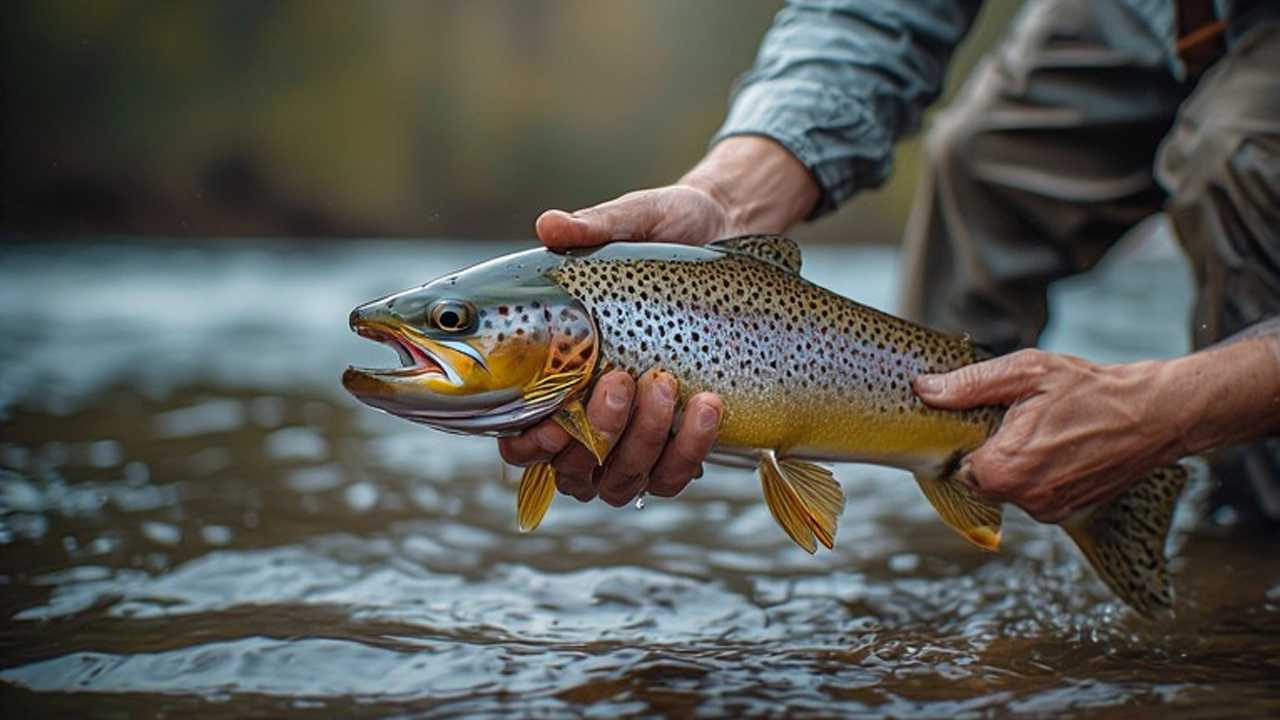
Trout: Trout are the crown jewel for many visitors, especially in dam tailwaters where cold releases keep fishing productive even when the rest of the state sweats. What changes in 2026 is not your chance to catch trout—it’s your responsibility when keeping them. Several famous tailwaters now have a two-fish daily limit framework with strong protection for larger trout, effective Feb. 1, 2026. That’s a big conservation move and it’s worth reading before you pack the cooler.
Pike / Muskie: You won’t hear “muskie” in every Arkansas bait shop conversation, but the broader point is this: Arkansas has pockets of specialized predator fishing where the rules can be more nuanced than typical panfish waters. If you’re targeting toothy fish, you’ll generally be fishing larger, cooler systems or specific managed waters where seasonal patterns and habitat matter more than “luck.”
Walleye / Catfish: Walleye show up as a “serious angler” target—often more structure- and timing-oriented—while catfish are everyone’s friend: bank anglers, families, and night owls alike. Statewide daily limits exist for both (with notable waterbody exceptions), and catfish regulations can vary a lot depending on location—some waters have “no limit” rules while others are more restrictive.
🦞 Regulated or Special-Permit Fisheries
Some Arkansas fisheries are intentionally “not simple,” because they protect rare opportunities.
- 🦈 Trophy alligator gar: Harvesting a gar over a certain size isn’t just “catch and keep.” Arkansas uses a tag-based approach for trophy fish, and there’s also a seasonal closure window for harvesting very large gar (measured length matters). If you’re traveling for a bucket-list gar, read the tag and timing requirements first.
- 🐟 Limited-entry paddlefish: Paddlefish snagging in certain areas can require a trophy tag and a draw/limited-entry approach—designed to keep the fishery from getting loved to death.
- 🦞 Tailwater trout “special management” zones: With the Feb. 1, 2026 trout changes, some tailwaters function more like high-value managed fisheries than “put-and-take.” Expect release rules for certain species and size ranges, and plan your tackle (barbless hooks can be a sanity-saver).
🐠 Everyday Fish & Panfish Opportunities
Here’s a quick, beginner-friendly snapshot—without turning it into a wall of numbers.
| Species | Typical creel limit type (plain-English) | Common places to find them |
|---|---|---|
| Bluegill / bream | Often a higher “panfish-style” daily count limit | Shorelines, docks, brush piles, community ponds |
| Crappie | Moderate daily count; some lakes have tighter caps | Standing timber, bridge pilings, brushy coves |
| Channel catfish | Count-based daily limit; exceptions exist by water | River bends, lake flats at night, stocked ponds |
| White bass | Count-based daily limit; some waters have very liberal rules | Current areas, dam outflows, schooling baitfish zones |
| Rock bass | Smaller daily limit compared to panfish | Clear streams, rocky banks, riffle edges |
(Always verify special exceptions by waterbody before you keep fish.)
🏞️ Stocked Waters & Management Programs
Arkansas stocking isn’t just “dump fish and hope.” It’s a strategy—tailored by water type and who the fishery is meant to serve.
- 🎣 Family and Community Fishing Program ponds are designed to be easy: close parking, friendly shorelines, and predictable stocking cycles. They’re also rule-specific—often rod/pole-only, and bass must be released immediately.
- 🐟 Winter trout stockings (Nov–Feb) turn certain ponds into cold-season gems, especially for kids or visitors without boats.
- 🐠 Trout tailwaters are a different universe—flow-driven, map-heavy, and dependent on dam operations. AGFC provides trout water resources and tailwater-focused guidance so you can plan around generation schedules and safe wading.
If you want the “official breadcrumb trail,” start at AGFC’s Where to Fish hub and follow it into maps and water-type pages.
🌍 Access Rules: Public vs Private Waterways (Listicle Only)
- 🏞️ Public doesn’t always mean “every shoreline.” A lake can be public while surrounding land is private—so you may need to enter via designated access.
- 🗺️ Use official maps to find legit entry points like boat ramps, walk-in access, and marked fishing areas. Start here: AGFC’s interactive mapping tools.
- 🚧 Signs matter—so do fences. “No Trespassing” isn’t a suggestion, and Arkansas landowners enforce it.
- 🎣 Respect parking rules at access sites; getting towed is the least fun “fish story” you can bring home.
- 🧹 Leave the bank cleaner than you found it. A trashy access gets closed faster than a slow bite.
🎟️ Arkansas Fishing License Overview (Simplified) (Listicle Only)
- 👤 Who needs one: In general, anglers 16 and older should expect to need a valid Arkansas fishing license to fish public waters. (Some special areas and activities may add requirements.)
- 🧾 Resident vs. nonresident: Nonresidents can choose annual or short trip options depending on visit length.
- 🐟 Trout permit logic: If you plan to **keep trout—or fish certain trout waters—**you’ll need a trout permit on top of your fishing license (resident and nonresident versions exist).
- 🧒 Youth rules: Younger anglers often have different requirements; verify before the trip, especially if the child is close to the age cutoff.
- 🧳 Short-term passes: Great for visitors—pair a trip license with the add-on permits you actually need (like trout).
- 🦞 Special endorsements/tags: Trophy species (like big alligator gar) and limited-entry fisheries (like paddlefish in certain areas) can require tags/permits.
For neighboring-state comparison reading (not Arkansas-specific), you can also glance at Arizona’s freshwater rule guide to see how differently states handle seasons and possession limits. (Just treat it as context, not Arkansas law.)
❓ Angler FAQs
Do Arkansas rules change by lake, or are they statewide?
Both. Arkansas has statewide baselines, but many waters have special exceptions. Always check the specific water you’re fishing.
If I catch trout in Arkansas, can I keep them anywhere?
Not always. Some waters require trout permits, and some stretches have stricter harvest rules—especially in tailwaters with 2026 updates.
What’s the easiest “first trout” plan for a visitor with no boat?
Target winter-stocked community ponds (Nov–Feb window) or a well-known tailwater access with safe wading options and clear boundary signs.
Where do I find legitimate public fishing access without guessing?
Use AGFC’s map tools and fishing location pages—boat ramps and walk-in access are often mapped.
Are there special rules on community fishing ponds?
Yes—some restrict methods (rod/pole-only), require releasing bass, and have their own daily limits.
What’s one regulation mistake beginners make a lot?
Assuming “possession limits” equal “what I caught today.” If you fish multiple days, the rules about what you can hold can be different than a single-day creel.
How do I stay updated if rules change mid-year?
AGFC notes that guidebooks are summaries and regulations can change; checking AGFC res before your trip is smart.
🗺️ Where to Fish This Year
If I were planning a 2026 Arkansas trip for a friend who’s “pretty new but enthusiastic,” I’d start with the waters that teach you something every hour. The White River tailwater area is famous for a reason: it’s the kind of trout water that can turn a casual angler into a lifelong one—clear current seams, drift lanes, and that electric feeling when a big trout flashes under your line. Just remember the new tailwater trout harvest limits that took effect Feb. 1, 2026.
Then I’d add a lake day—someplace like Greers Ferry Lake where you can mix species and techniques and still feel like you’re in classic Arkansas scenery. For families (or anyone who prefers “easy access + reliable action”), I’d carve out a morning at a Family and Community Fishing Program pond, especially during the winter trout stocking season or the spring/fall catfish rhythm.
Finally, I’d keep one flexible day and let conditions decide—because Arkansas rewards adaptability. Windy? Find protected coves. High water on the river? Slide to a managed lake. Unsure where to start? Use AGFC’s official “Where to Fish” portal and follow it into the map tools and public area listings. AGFC’s “Where to Fish” hub.
For an additional high-authority reference that many traveling anglers like to cross-check, you can also use Arkansas fishing rules on eRegulations for a second look—then default back to AGFC when anything conflicts.
✅ Final Thoughts
Arkansas’ 2026 fishing is less about “one perfect opener” and more about staying in rhythm with the water: early spring bass and crappie movement, peak-summer catfish and dawn patrol bites, fall feeding windows, and winter trout opportunities—especially in stocked community ponds (Nov–Feb) and in tailwaters with cold flows. The big date to remember is Feb. 1, 2026, when AGFC’s new trout tailwater limits took effect on several marquee waters, tightening harvest and protecting larger fish for long-term quality. Keep your license current, add trout permits when needed, and assume every major lake or tailwater could have special length or possession limits worth double-checking before you keep fish.

- Wyoming Fishing Regulations 2026: State Rules & Management Areas - February 16, 2026
- Wisconsin Fishing Regulations by Zone 2026: Seasons & Size Limits - February 16, 2026
- West Virginia Fishing Regulations 2026: Stream & Lake Rules - February 16, 2026