There’s a particular Rhode Island morning that makes you believe fishing is a kind of quiet magic: that first early-spring thaw when the edges of a pond finally loosen up, the air still has winter in it, and you can hear water moving again. 🎣
In this tiny state, fishing changes fast as the year turns. One week you’re chasing freshly stocked trout in a cold stream; a few months later you’re watching bass cruise lily-pad edges; and out on the salt, the whole coast can feel like it flips a switch when migratory fish roll in. The key is knowing your catch dates, the waters that have special rules, and the handful of “extra steps” like stamps or permits that pop up in managed fisheries.
Rhode Island is also refreshingly visitor-friendly: you can buy licenses online, find stocked waters, and track updates without digging through a pile of paperwork. Still—this is the Ocean State, and conservation is baked into the experience. Many rules exist to protect wild fish (like native brook trout) and to keep heavily fished areas from getting loved to death.
Complete [Rhode Island] Fishing Season Dates 2026
Here’s a practical “big picture” table (not every species, but the season windows beginners ask about most). Always double-check for special waters and any emergency changes.
| Fishery / Rule Window | Typical Open Dates You’ll Plan Around | Notes for Casual Anglers |
|---|---|---|
| Trout-stocked waters “main season” | Second Saturday in April ➜ end of February | Trout-stocked waters close briefly before opening day each year. |
| Trout daily limit changes (same season, different limits) | April opener ➜ Nov 30 (higher); Dec 1 ➜ end of Feb (lower) | Limits shift in winter—easy to forget when the bite is good. |
| Freshwater “warmwater” species (bass/pike/pickerel & most others) | Generally open year-round | Some waters have exceptions and special methods-of-take. |
| Saltwater: summer flounder (general) | Apr 1 ➜ Dec 31 | Shore areas can have special possession rules. |
| Saltwater: scup (porgy) | May 1 ➜ Dec 31 | Shore vs boat minimum size can differ. |
| Saltwater: tautog (blackfish) sub-periods | Spring + late summer + fall windows | Has closure period mid-year; check sub-period rules. |
| Free Fishing Weekend (freshwater) | First full weekend of May | No freshwater license or trout stamp required that weekend. |
🗓️ Seasonal Fishing Breakdown
Early Spring (ice-out to the first big warm-up) 🐟
- Trout fishing becomes the headline act: stocked ponds, rivers, and streams draw everyone from first-timers to serious fly folks.
- Watch-outs you’ll want on a sticky note:
- Trout-stocked waters have a defined season window that begins on the second Saturday in April (a real “holiday” vibe).
- Certain waters can be catch-and-release only with gear restrictions (single hook, often barbless/crimped). The Beaver River has a notable protected section designed to safeguard wild brook trout.
- Beginner-friendly approach:
- Pick one stocked pond with easy access, bring a small spinning rod, and keep your first trip simple—one bait, one lure, one plan.
Peak Summer (warmwater rules, saltwater energy) 🐠
- Bass fishing settles into a pattern—morning and evening are your best friends.
- Panfish become the “confidence builders” for families and visitors: if you just want bites, these are your buddies. 🐟
- In the salt, the summer menu expands—especially if you’re trying shore spots, party boats, or a quick bay trip. (This is where checking size-and-possession rules by species really matters.)
Fall Transition (cooler nights, hungrier fish) 🎣
- Trout gets a second wind thanks to fall and even winter stocking in many waters. That’s a big deal because it keeps freshwater fisheries interesting long after beach season ends.
- This is also when casual anglers suddenly feel like pros:
- fish feed harder,
- water temps stabilize,
- crowds thin out.
Winter (yes, Rhode Island still fishes) 🦞
- Freshwater doesn’t “stop,” it just becomes more deliberate.
- Trout limits change after Dec 1 (typically lower), which is exactly when some folks forget to re-check creel rules.
- If you’re trying winter stocked ponds: scale down your presentations and slow everything down—your lure should look like it’s half-asleep.
🐟 Game Fish Anglers Target Most
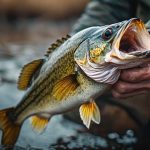
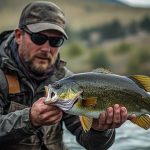
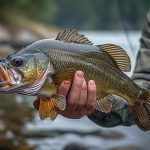
Bass: Rhode Island bass fishing is forgiving, which is why it’s a favorite for new anglers who want something bigger than a sunfish but not as “technical” as trout. As water warms, largemouth settle into weedy shallows and smallmouth lean toward rockier structure and moving water. In many places, bass opportunities run broadly through the year with minimum size/possession rules to protect the fishery—so your main job is to measure accurately and practice gentle handling when releasing. Lakes, ponds, and slower river stretches are your bread and butter.
Trout: Trout is Rhode Island’s seasonal heartbeat—especially in stocked waters that open on the second Saturday in April. They’re most active in cool water: early spring, during fall stockings, and through winter windows when conditions allow. Limits and rules can shift between the “regular” part of the season and the colder months, and some streams are managed with catch-and-release or fly-only style regulations. If you’re visiting, trout is the species most likely to give you a classic New England fishing day.
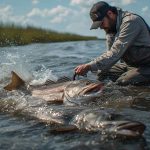
Pike / Muskie: Northern pike are the big freshwater predators that make Rhode Island ponds feel a little wilder. Pike generally stay on the menu without a closed season statewide, but they’re managed with stricter size expectations and lower possession compared with panfish—because a few harvested fish can change the whole balance of a lake. Focus on larger ponds and weedy edges where baitfish gather. (Muskie isn’t the signature Rhode Island storyline the way it is in some Midwest waters; pike is the one most anglers mean here.)
Walleye / Catfish (if applicable): Rhode Island isn’t known as a “walleye state,” and catfish aren’t the headline species like they are farther south. That doesn’t mean you can’t stumble into them or find local pockets of opportunity—but most casual anglers will have more consistent success focusing on trout, bass, pike, pickerel, and panfish in freshwater fisheries, then shifting to scup/fluke/tautog-style targets in the salt when you want a different adventure.
🦞 Regulated or Special-Permit Fisheries
Rhode Island has a few fisheries where management is tight for good reasons—pressure is high, stocks fluctuate, and the resource is valuable.
- Trout Conservation Stamp: If you plan to keep trout (or possess trout/salmon/charr) or if you’re fishing in designated catch-and-release or fly-fishing-only areas, you generally need a trout stamp in addition to your freshwater license.
- Wild brook trout protection areas: The Beaver River has a protected section with catch-and-release-only rules and gear restrictions aimed at conserving wild brook trout populations. That’s conservation in action, not bureaucracy.
- Saltwater species with changing possession limits and sub-periods: Tautog and other coastal species are often managed with specific open windows and special shore-area rules. When you’re fishing places like walls, forts, and popular shoreline parks, be extra mindful—those are exactly the areas that get targeted hardest.
🐠 Everyday Fish & Panfish Opportunities
Different table style on purpose—simple and beginner-readable:
| “Any-day” Species | Typical Creel Limit Type | Where You’ll Usually Find Them |
|---|---|---|
| Bluegill / Sunfish 🐟 | Often higher daily limits | Shallow coves, docks, warm ponds |
| Yellow Perch 🐠 | Moderate limits | Weed edges, deeper pond basins |
| Crappie | Moderate limits | Brush, submerged timber, quiet corners |
| Chain Pickerel 🦈 | Lower than panfish (predator rules) | Weedy lanes, ambush points near pads |
Rhode Island specifically highlights panfish like crappie, yellow perch, and sunfish as key “warm-water” opportunities for casual anglers.
🏞️ Stocked Waters & Management Programs
If you’re new, stocking is your shortcut to confidence. Rhode Island stocks many waters before opening day and continues with additional stockings through the year—spring, fall, and even winter drops depending on conditions. That’s why a small state can feel like it has a surprisingly big fishing calendar.
A few practical tips that make stocking work for you:
- Treat the state’s stocked-waters page like a “trail report.” It lists updates by date and names the waters stocked—great for trip planning.
- Youth-focused ponds exist (some are “children-only” at specific times early in the season), which helps families fish without getting elbowed out by crowds.
For a quick comparison with a neighboring region’s approach, you can also browse Connecticut fishing rules overview once—handy if you’re road-tripping and want to keep your regulations straight. 🎣
🌍 Access Rules: Public vs Private Waterways
- Public access usually means designated shore entries, boat ramps, or state-managed lands—don’t assume “water = public.”
- Use official access datasets and state map tools to identify legit entry points before you drive out. A strong starting place is Rhode Island DEM map & charts hub.
- Follow signage like it’s part of the fishing gear: “No Parking,” “Private,” and “Resident Only” rules are enforced in popular areas.
- If you’re unsure, pick a clearly marked state park pond or a well-known stocked water—your day goes better when access is stress-free.
- Pack out line, bait cups, and soft plastics. Leaving trash is the fastest way anglers lose access. 🐟
🎟️ [Rhode Island] Fishing License Overview (Simplified) (listicle only)
- If you’re 15+, you generally need a freshwater fishing license to fish in freshwater.
- For saltwater, anglers typically need a recreational saltwater license starting at age 16+, unless covered by a reciprocal state license or federal registration; party/charter passengers usually don’t need one.
- Youth under 15 can fish freshwater without buying a license (great for family trips).
- Resident vs non-resident: the big difference is cost and sometimes which short-term options you can use—rules are simple, but always buy the correct category for where you live.
- Short-term passes exist (helpful for visitors who are only here for a weekend).
- If you want to keep trout (or fish certain special-regulation waters), you’ll likely need a Trout Conservation Stamp in addition to the license.
- Easiest path: buy online through Rhode Island Outdoors licensing portal and keep proof accessible on your phone.
❓ Angler FAQs
Can I fish freshwater year-round in Rhode Island?
Generally yes for many species, but trout-stocked waters have specific season windows and closure periods around the opener.
What’s the easiest way to know if a pond is stocked?
Use the state’s trout-stocked waters page—updates are posted by date and location.
Do I need anything extra to keep trout?
Often, yes: a Trout Conservation Stamp is required in common scenarios (keeping trout or fishing certain managed areas).
Are there places set aside for kids to fish?
Yes—Rhode Island has “children-only” pond rules in some locations and time windows early in trout season.
If I catch a striped bass in a river, do freshwater rules apply?
No—striped bass is managed as a marine species even when caught in some rivers, so marine rules apply.
Do saltwater shore spots ever have different rules than boats?
They can. Rhode Island’s saltwater rules include special shore-area provisions for certain species.
Is there a reputable place to double-check federal saltwater rules?
Yes—NOAA Fisheries maintains recreational regulations by species (useful when you’re near federal waters). NOAA recreational fishing regulations by species.
🗺️ Where to Fish This Year
If you want to feel Rhode Island fishing in a single season, start with a stocked pond morning—something like Carbuncle Pond after a stocking update hits, when the shoreline has that hopeful hush and everyone’s casting like the next fish could be the one. Then take a slow afternoon on the Wood River, especially in cooler weather when trout are active and the current does half the work of making your lure look alive. (The state frequently lists both in stocking updates, which is a good sign they’re core waters.)
For a different vibe, Watchaug Pond can feel like a mini vacation—bigger water, a little more room to breathe, and a nice “visitor-friendly” rhythm if you’re learning. And if you’re around Lincoln Woods, Olney Pond shows up often in stocking notes and tends to be an easy win for access and convenience.
When you’re ready to branch out beyond “famous names,” use official state mapping to find legal entry points and shore access so you’re not guessing at gates or driveways. RIDEM fish & wildlife maps and charts is the safest starting line.
✅ Final Thoughts
Rhode Island fishing in 2026 is best thought of as two overlapping worlds: freshwater fisheries that run year-round (with trout-stocked waters centered on an annual opener on the second Saturday in April and continuing through the end of February), and saltwater seasons that shift by species with strict size/possession limits and periodic closures. Plan your trips around the trout season window, remember the winter limit change after Dec 1, respect special catch-and-release waters like the Beaver River protected section, and keep your license/stamp requirements straight (freshwater license starting at age 15, saltwater at age 16, plus a trout stamp in common trout scenarios). Do that, and Rhode Island becomes an easy, welcoming place to build confidence—one honest cast at a time. 🎣🐟

- Wyoming Fishing Regulations 2026: State Rules & Management Areas - February 16, 2026
- Wisconsin Fishing Regulations by Zone 2026: Seasons & Size Limits - February 16, 2026
- West Virginia Fishing Regulations 2026: Stream & Lake Rules - February 16, 2026