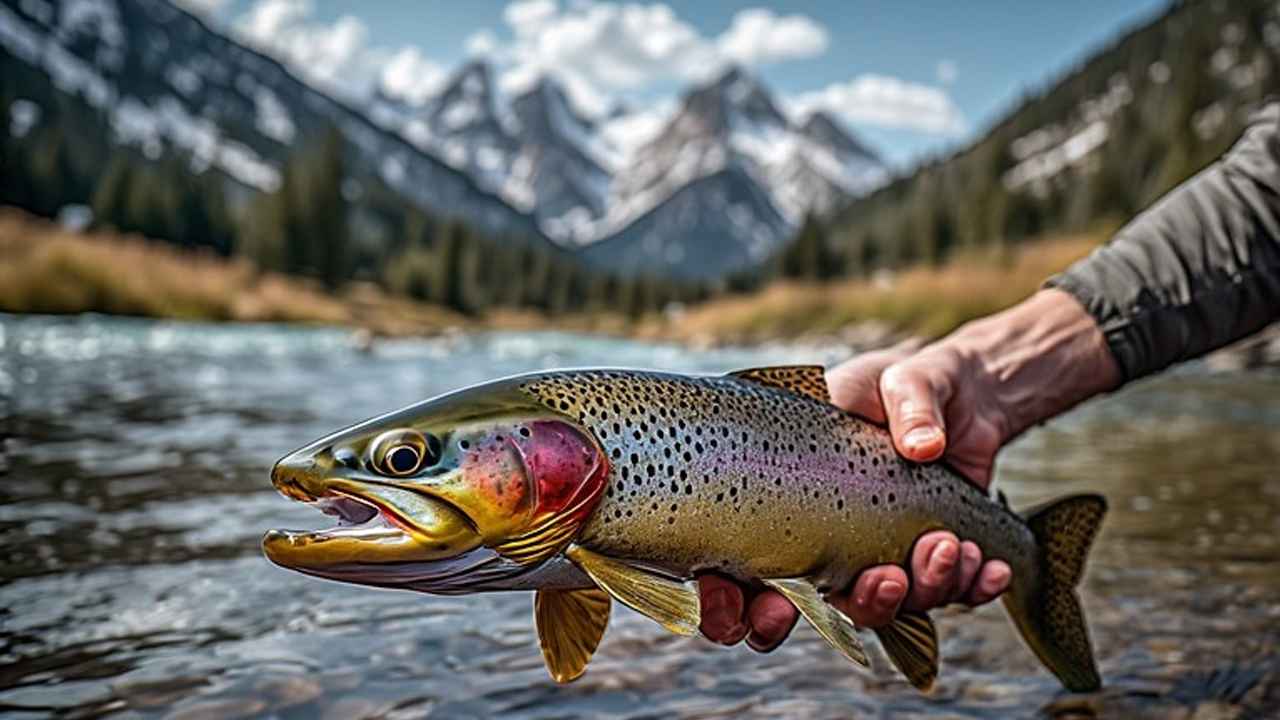
This is Wyoming—a state where angling isn’t just a pastime, it’s woven into the very fabric of mountain life.
In the Cowboy State, fishing opportunities shift with the seasons like chapters in a well-loved book. As winter’s grip loosens in March, ice-off brings eager anglers to low-elevation reservoirs. By summer, high mountain lakes sparkle under endless blue skies, accessible at last after months buried under snow. When autumn paints the aspen groves gold, spawning runs create once-in-a-year chances for serious trophy hunters.
Wyoming’s approach to fisheries management balances opportunity with conservation—a philosophy that keeps waters healthy for future generations while giving today’s anglers plenty of reasons to wet a line. Whether you’re a resident with a lifetime license or a visitor planning your first Western fishing adventure, understanding the rhythm of Wyoming’s angling calendar helps you make the most of every cast. The state welcomes anglers of all skill levels, from families trying their luck at stocked urban ponds to backcountry enthusiasts hiking miles into wilderness lakes where cutthroat trout have never seen artificial flies.
🗓️ Complete Wyoming Fishing Season Dates 2026
| Water Type | Season Dates | Key Species | Special Notes |
|---|---|---|---|
| General Streams & Rivers | Open Year-Round | Trout (all species), whitefish, bass | Most streams open continuously; check specific closures |
| General Lakes & Reservoirs | Open Year-Round | Trout, bass, walleye, pike, perch | Ice fishing permitted when safely frozen |
| North Platte River (Miracle Mile, Gray Reef) | Open Year-Round | Rainbow trout, brown trout | Single-point barbless hooks required effective Jan 2026 |
| North Platte – Gray Reef (Ledge Creek Area) | Closed April 1 – May 15 | Rainbow trout spawning | New 2026 spawning closure to protect rainbows |
| Jackson Lake | Open Year-Round (NEW for 2026) | Lake trout, cutthroat, browns | October closure REMOVED in 2026—now open all months |
| Snake River (Jackson Lake Dam to Gauging Station) | Open Year-Round | Cutthroat trout | Daily limit DOUBLED to 6 trout, length restrictions removed |
| Fremont Canyon | Open Year-Round | Brown trout, rainbows | Pegged attractors prohibited; barbless hooks required |
| High Mountain Lakes (above 10,000 ft) | Ice-out (June/July) – October | Golden trout, cutthroat | Access dependent on snowpack; verify trail conditions |
| Flaming Gorge Reservoir | Open Year-Round | Lake trout, kokanee salmon, burbot | Special creel limits apply; see Area 4 regulations |
Important: While most Wyoming waters remain open throughout the calendar year, always verify area-specific regulations and seasonal closures before heading out. The Wyoming Game and Fish Department updates regulations annually to reflect changing fishery conditions.
🌤️ Seasonal Fishing Breakdown Specific to Wyoming
Early Spring (March – May)
The pre-runoff period offers some of Wyoming’s most rewarding angling, though you’ll need to choose your timing carefully. Lower elevation tailwaters like the North Platte below Alcova and the Bighorn River fish exceptionally well during March and April, before snowmelt clouds the water. Trout are hungry after winter and actively feeding on emerging midges and early mayflies. Reservoir fishing picks up as ice retreats—Boysen, Glendo, and Pathfinder all see increased activity from walleye, perch, and cruising pike.
By late April, runoff begins transforming mountain streams into chocolate-colored torrents. This doesn’t mean the fishing stops—it just moves. Savvy anglers shift to spring creeks with stable flows, tailwaters below dams, or lakes where visibility remains good. The Gray Reef section of the North Platte now includes a spawning closure from April 1-May 15 downstream of Ledge Creek, protecting rainbow trout during their reproductive cycle. Respecting these closures ensures future generations of fish.
Peak Summer (June – August)
Summer transforms Wyoming into an angler’s paradise, though “peak” means different things depending on elevation. By mid-June, runoff typically clears from most rivers, revealing gin-clear water and hungry trout. The Snake River through Jackson Hole becomes a dry-fly haven, with pale morning duns and caddis bringing fish to the surface throughout long summer evenings. The 2026 regulation changes have made this stretch even more appealing—anglers can now keep six trout daily instead of three, with no length restrictions.
High country fishing truly comes alive once snowpack melts from access trails, typically late June through July depending on elevation. Alpine lakes in the Wind River Range, Absaroka Mountains, and Beartooth Plateau offer pristine fishing for cutthroat and golden trout. The hike might challenge your lungs, but the rewards—aggressive fish that have never seen a lure, surrounded by wilderness that looks unchanged since the Ice Age—make every step worthwhile.
Free Fishing Day falls on June 6, 2026, when anyone can fish without a license while still following all creel limits and regulations. It’s Wyoming’s invitation to families and first-timers to discover what makes angling so special.
Fall Transition (September – November)
Autumn brings some of Wyoming’s most dramatic fishing. As water temperatures drop, trout feed aggressively to build reserves for winter. Brown trout begin their spawning runs, pushing up from reservoirs into tributary streams—the Miracle Mile section of the North Platte becomes legendary during this period, with lake-run browns from Pathfinder Reservoir exceeding 20 inches.
Bass fishing on reservoirs like Keyhole and Hawk Springs remains productive through September, with smallmouth and largemouth relating to rocky structure and feeding heavily before cold weather arrives. Jackson Lake stays open through October now—a significant change for 2026—giving anglers extended access to one of the state’s premier mackinaw fisheries.
By November, hardy anglers brave cold weather for late-season opportunities. Many streams see reduced pressure but excellent fishing, particularly on mild days when midges hatch. Ice begins forming on high-elevation lakes, signaling the transition toward winter patterns.
Winter (December – February)
Wyoming’s winter fisheries require dedication but reward those willing to brave the elements. Tailwater sections remain productive when daytime temperatures moderate—the North Platte, Bighorn, and Green River all fish year-round, with trout concentrating in deeper pools and slower runs. Midge hatches bring fish to the surface even on snowy days, creating opportunities for technical dry-fly enthusiasts.
Ice fishing expands access to countless lakes and reservoirs once safe ice thickness develops (minimum 4 inches for foot traffic). Perch and crappie provide fast action for families, while serious anglers target trophy lake trout at Flaming Gorge or burbot (ling) on Boysen Reservoir. Always verify ice conditions before venturing out—Wyoming’s temperature fluctuations can create unsafe conditions even during midwinter.
🐟 Game Fish Anglers Target Most
Bass (Largemouth & Smallmouth)
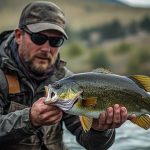
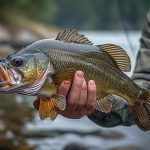
Wyoming might be famous for trout, but bass fishing offers underrated excitement, especially for anglers who appreciate aggressive strikes and hard fights. Keyhole Reservoir in the northeast corner holds the state’s most robust largemouth population, with fish regularly exceeding 4 pounds. The reservoir’s rocky shorelines and submerged structure create ideal habitat, and summer evenings produce explosive topwater action.
Smallmouth bass thrive in several Wyoming waters, particularly Boysen Reservoir and portions of the Bighorn River system. These bronze-backed fighters prefer rocky habitat and cooler water than their largemouth cousins. The statewide creel limit sits at six bass in combination (largemouth and smallmouth together), giving anglers reasonable harvest opportunity while protecting the resource. Peak season runs from late May through September, though bass bite year-round when temperatures moderate.
What makes Wyoming bass fishing special is the scenery—you’re casting against backdrops of red rock canyons or mountain peaks rather than suburban development. Many bass waters receive relatively light pressure compared to trout destinations, meaning fish are less wary and more willing to bite. Try crankbaits around rocky points during spring, switch to plastic worms during summer heat, and throw jerkbaits during fall when bass feed aggressively before winter.
Trout (Rainbow, Brown, Cutthroat, Brook, Golden)
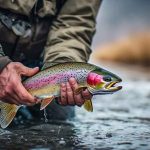
Trout are Wyoming’s signature sport fish, and for good reason—the state’s cold, clean water creates ideal conditions for multiple species. Rainbow trout dominate many rivers and reservoirs, known for aerial acrobatics when hooked and willingness to chase lures or flies. The North Platte River system produces some of the state’s finest rainbow fishing, with fish averaging 14-18 inches and occasional trophies pushing beyond 20 inches.
Brown trout, originally from Europe, have found a perfect home in Wyoming’s tailwaters and large rivers. These cunning fish grow large on diets of smaller fish, aquatic insects, and even mice during fall. The Miracle Mile stretch produces consistent catches of browns exceeding 20 inches, particularly during autumn spawning runs. Browns tend to feed more actively during low-light periods—dawn, dusk, and overcast days produce the best results.
Cutthroat trout are Wyoming’s native treasure, with Yellowstone cutthroat, Snake River cutthroat, Colorado River cutthroat, and Bonneville cutthroat all present in different drainages. These beautiful fish, distinguished by the red slash marks beneath their lower jaw, represent an important conservation priority. Many high-mountain lakes contain pure cutthroat strains that have remained genetically isolated for thousands of years. The Wyoming Cutt-Slam program challenges anglers to catch all four subspecies—a worthy goal that encourages exploration of the state’s diverse waters.
Brook trout and golden trout occupy specialized niches in Wyoming’s coldest, highest-elevation waters. Brookies, though non-native, have colonized countless mountain streams and lakes. The statewide creel limit of 16 brook trout reflects management efforts to prevent overcrowding. Golden trout, the rarest of Wyoming’s salmonids, inhabit only a handful of remote alpine lakes—catching one requires significant hiking but delivers an unforgettable experience.
Standard trout creel limits for 2026: In streams, three trout daily with no more than one exceeding 16 inches. In lakes, six trout daily. The combined possession limit from both streams and lakes is six trout total. These regulations balance harvest opportunity with conservation, ensuring quality fishing persists.
Pike & Muskie
Northern pike provide thrilling fishing in several Wyoming waters, though regulations vary significantly by location. These toothy predators grow large on diets of smaller fish, crayfish, and even ducklings. Check area-specific regulations carefully—some waters have no limit to encourage removal (particularly where pike threaten native trout), while others have conservative harvest rules.
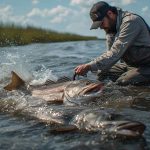
Tiger muskie, a sterile hybrid between northern pike and muskellunge, inhabit select waters as part of management programs. These fish grow even larger than pure pike, with specimens exceeding 40 inches caught regularly. The statewide regulation requires all tiger muskie under 36 inches be released immediately, with only one fish over 36 inches retained daily. This trophy-quality standard ensures only mature fish are harvested, maintaining the excitement of pursuing genuine monsters.
Walleye & Catfish
Walleye fishing has grown increasingly popular in Wyoming, particularly on Boysen Reservoir, Glendo Reservoir, and the Bighorn River drainage. These marble-eyed predators feed primarily during low-light periods, making dawn, dusk, and nighttime most productive. The statewide limit of six walleye daily provides ample opportunity for fish dinners—walleye rank among the finest eating fish in freshwater.
Channel catfish offer consistent action in warm-water reservoirs and the lower reaches of major rivers. These whiskered brawlers aren’t picky eaters, taking everything from cut bait to chicken liver to prepared stinkbaits. The six-fish daily limit gives families plenty of opportunity to fill coolers. Summer nights provide the best catfish action, when these primarily nocturnal feeders cruise shallow water hunting for meals.
🦞 Regulated or Special-Permit Fisheries
Wyoming manages several fisheries with special restrictions designed to create unique angling experiences or protect sensitive populations. Understanding these programs helps anglers access premier opportunities while supporting conservation objectives.
Yellowstone Cutthroat Conservation Waters: Certain streams and lakes receive special protection to preserve genetically pure Yellowstone cutthroat populations. Some are catch-and-release only, while others allow limited harvest. These regulations counteract decades of hybridization and competition from non-native species. Fishing these designated waters connects anglers to Wyoming’s natural heritage—cutthroat trout that have inhabited these drainages since glaciers retreated 10,000 years ago.
Trophy Trout Waters: Select river sections and lakes have reduced creel limits or slot limits designed to maintain exceptional size structure. The Gray Reef section of the North Platte now requires single-point, barbless hooks as of 2026, reducing mortality in catch-and-release fisheries. The Alcova Afterbay, Fremont Canyon, and portions of the Miracle Mile all carry special tackle restrictions. These rules might seem restrictive initially, but they create the conditions for trophy fisheries—places where average trout measure 16 inches and 20-inch fish are realistic goals.
Kokanee Salmon Waters: Flaming Gorge Reservoir and a few other select waters hold kokanee salmon, a landlocked sockeye that provides unique fishing opportunities. These silvery fish feed on plankton in open water, requiring specialized trolling techniques with downriggers or lead-core line. During fall spawning runs into tributary streams, kokanee turn brilliant red and provide exciting fishing with flies or small lures.
Burbot (Ling) Fisheries: This prehistoric-looking fish thrives in several Wyoming reservoirs. Some waters encourage harvest to reduce competition with game fish, while others have conservative limits. Boysen Reservoir has become famous for burbot fishing through the ice—these cod relatives bite aggressively during winter months and offer excellent eating. The statewide limit is three burbot daily, though regional variations exist.
For any special-permit waters or draw-only access areas, the Wyoming Game and Fish Department provides detailed information through their website and regional offices. These managed fisheries represent the state’s commitment to providing diverse, quality angling experiences while protecting aquatic resources for future generations.
🐠 Everyday Fish & Panfish Opportunities
| Species | Typical Possession Rule | Where Commonly Found | Best Season |
|---|---|---|---|
| Yellow Perch | 50 daily (combined with other panfish) | Glendo, Keyhole, Hawk Springs reservoirs | Winter through ice; summer structure |
| Crappie (Black & White) | 50 daily (combined with other panfish) | Boysen, Glendo, reservoirs with timber | Spring spawn near shallow cover |
| Bluegill & Pumpkinseed | 50 daily (combined with other panfish) | Urban ponds, warm-water reservoirs | Summer near vegetation and docks |
| Rock Bass | 50 daily (combined with other panfish) | Rocky shorelines, boulder-strewn reservoirs | Late spring through fall |
| Green Sunfish & Hybrids | 50 daily (combined with other panfish) | Warm, shallow ponds and lake edges | Summer; aggressive biters |
| Black Bullhead | 50 daily (combined with other panfish) | Muddy-bottom ponds, slow river backwaters | Night fishing during warm months |
Panfish provide Wyoming’s most accessible angling—perfect for introducing kids to fishing, filling stringers for fish fries, or simply enjoying fast action when time is limited. The generous 50-fish combined limit reflects the reproductive capacity of these species and management goals to prevent overpopulation. Many urban areas maintain stocked ponds specifically for family fishing, where panfish thrive and provide consistent catching.
🏞️ Stocked Waters & Management Programs
Wyoming’s stocking program turns ordinary waters into productive fisheries while providing opportunities near population centers where access is easy. Each year, state hatcheries raise millions of trout, along with walleye, bass, and other species, distributing them strategically across public waters.
The aerial fish stocking program might be Wyoming’s most visually spectacular conservation effort. During summer months, helicopters and fixed-wing aircraft deliver fingerling trout to remote alpine lakes inaccessible by ground transportation. These stocking flights, which have occurred for decades, established fisheries in hundreds of high-mountain lakes that would otherwise remain fishless. Watching thousands of tiny trout tumble through the air into pristine water below represents conservation meeting adventure in the most Wyoming way possible.
Urban fishing programs bring angling opportunities to cities and towns, where stocked ponds provide convenient access for families, youth groups, and beginners. Cheyenne, Casper, Laramie, and other communities maintain fishing ponds within municipal parks, often stocking them with catchable-size trout multiple times during spring and fall. These programs introduce thousands of kids to fishing annually, creating the next generation of anglers and conservationists.
Want to know which waters received recent stockings? The Wyoming Game and Fish Department maintains current stocking reports on their official website, listing species, numbers, and dates for waters across the state. Timing visits shortly after stockings can provide exceptional fishing, particularly in smaller waters where newly introduced fish haven’t yet been subjected to heavy angling pressure. If you’re looking for regulations and stocking information in neighboring states, check out Montana fishing regulations or Colorado fishing regulations for comparison.
The Wyoming Master Angler Program recognizes exceptional catches across multiple species categories, encouraging catch-and-release ethics while celebrating trophy fish. Anglers who catch qualifying fish can receive official recognition and contribute data that helps biologists understand fishery health. It’s competition, conservation, and personal achievement rolled together—very Wyoming.
🌍 Access Rules: Public vs Private Waterways
Understanding access rights prevents trespassing problems and ensures you’re fishing legally. Wyoming’s access laws differ significantly from neighboring states, and confusion can lead to unpleasant confrontations or citations.
- Public Lands Mean Public Access: Waters flowing through national forests, BLM land, state trust lands, or other public property are accessible to anglers. However, reaching those waters legally requires crossing public land or using designated access points—you cannot cross private property without permission, even to reach public water.
- The High-Water Mark Rule: Wyoming follows the high-water mark principle for navigation and access. If you’re floating a navigable river, you can fish from your boat while floating, but stepping out onto the streambed or banks may constitute trespass if the adjacent land is private. This differs from states with corner-crossing debates—stay in your boat on private sections unless explicitly posted otherwise.
- Walk-In Areas & Public Access Sites: The Wyoming Game and Fish Department maintains hundreds of formal Public Access Areas and negotiates Walk-In Area agreements with private landowners. These sites, marked with distinctive green-and-white signs, provide legal entry points to waters that might otherwise be difficult to reach. A current access area map (available online or at regional offices) should be essential equipment in every angler’s vehicle.
- Respecting Private Property: When in doubt about access legality, ask permission before crossing private land. Most Wyoming landowners appreciate courtesy and will grant access when approached respectfully. Purple paint marks on fence posts indicate no trespassing—respect these boundaries just as you would posted signs.
- Identifying Legal Entry: Look for Game and Fish Department signs, public road easements, or marked parking areas. Many productive waters have limited access points despite flowing through extensive public land—do your homework before heading out. Satellite imagery and public land apps help identify legal approaches, though always verify with current regulations and local knowledge.
The outdoor recreation community depends on maintaining positive relationships with private landowners. Trespassing, leaving gates open, or creating disturbances jeopardizes future access for everyone. Wyoming’s tradition of respecting property rights goes hand-in-hand with public land opportunities—honor both to keep fishing access available.
🎟️ Wyoming Fishing License Overview
- Who Needs Licenses: All anglers age 14 and older must possess valid fishing licenses, whether resident or nonresident. Youth under 14 can fish without licenses but must follow creel limits. Resident youth 14-17 can purchase discounted Youth Licenses.
- Resident vs. Nonresident Differences: Residents pay $27 for annual licenses plus a $21.50 Conservation Stamp (total $48.50). Nonresidents pay $102 for annual licenses plus the same Conservation Stamp (total $123.50). The price difference reflects residents’ year-round contributions to wildlife funding through other taxes and fees.
- Establishing Residency: Wyoming requires one full year of continuous domicile before qualifying for resident licenses. You cannot have claimed residency elsewhere during that period for any purpose—including voting, vehicle registration, or taxes. College attendance alone doesn’t establish residency. The Wyoming Game and Fish website provides detailed residency eligibility criteria if your situation is complex.
- Short-Term Options for Visitors: Nonresidents can purchase daily licenses ($14) for single-day trips or five consecutive day licenses ($56) for short vacations. These provide affordable access without committing to full-season prices. Daily licenses don’t require the Conservation Stamp, further reducing costs for casual anglers.
- Youth Advantages: Resident youth between 14-17 pay only $3 annually for full fishing privileges—an incredible value designed to keep young people engaged with outdoor recreation. Nonresident youth under 14 can fish under an accompanying adult’s license, though their catch counts toward that adult’s creel limit. Nonresident youth 14-17 pay $15 annually for independent licenses.
- Special Endorsements & Stamps: The Conservation Stamp funds wildlife habitat projects statewide and is required for most fishing licenses (exceptions include daily licenses and certain veteran/disability licenses). The Flaming Gorge Reciprocal Stamp ($30) allows Utah resident license holders to fish Wyoming waters of Flaming Gorge Reservoir without purchasing separate Wyoming licenses—a cooperative agreement benefiting anglers in both states.
- Lifetime & Pioneer Licenses: Wyoming residents who have lived in-state continuously for 10 years can purchase Lifetime Fishing Licenses ($311 or $496.50 with Conservation Stamp). Pioneer Licenses are free for residents age 65+ with 30 total years of Wyoming residency. Disabled veterans and permanently disabled residents qualify for free or reduced-fee licenses—contact regional offices for eligibility details. For additional information about conservation programs and license requirements, the U.S. Fish & Wildlife Service provides helpful resources.
- Where to Buy: Licenses are available through the Wyoming Game and Fish Department’s online system, at regional offices throughout the state, and through countless license agents (sporting goods stores, gas stations, convenience stores). Electronic licenses can be displayed on smartphones—no need to print paper copies, though it’s smart to screenshot your license in case of poor cell service in the field.
❓ Angler FAQs
Can I use live bait in Wyoming, and are there restrictions?
Live bait is legal on most Wyoming waters, but regulations prohibit using live baitfish (minnows, chubs, suckers) in certain drainages to prevent the spread of invasive species and diseases. Worms, leeches, and grasshoppers remain legal statewide. Always check area-specific regulations before using live bait, particularly in trout streams where artificial lure restrictions may apply. The Live Bait Regulation documentation available from Wyoming Game and Fish clarifies which waters allow or prohibit various bait types.
What are the new 2026 tackle restrictions on the North Platte River?
Effective January 1, 2026, the North Platte River sections below Seminoe Reservoir—including Miracle Mile, Alcova Afterbay, Gray Reef, and Fremont Canyon—require single-point, barbless hooks. This reduces injury to released fish in these heavily fished catch-and-release waters. Additionally, pegged attractors are now prohibited at Fremont Canyon and Gray Reef. The artificial fly and lure requirement at Gray Reef has been extended downstream to Government Bridge. These changes reflect evolving best practices in trophy fishery management.
Is ice fishing allowed, and what safety precautions should I take?
Ice fishing is permitted on Wyoming waters when safely frozen, with no specific season closure. However, ice thickness and safety are entirely the angler’s responsibility. Minimum safe ice thickness is 4 inches for foot travel, 5-6 inches for snowmobiles or ATVs. Wyoming’s weather fluctuates dramatically—warm spells can weaken ice rapidly even during midwinter. Always test ice thickness as you progress outward, carry safety picks, fish with a buddy, and tell someone your plans. Ice conditions vary across individual lakes—safe ice on one end doesn’t guarantee safety across the entire water body.
What’s different about Jackson Lake and the Snake River for 2026?
Two significant changes benefit anglers in the Jackson area. First, Jackson Lake no longer closes during October—it now remains open for fishing year-round. This extends the season for lake trout, cutthroat, and brown trout fishing through autumn. Second, on the Snake River between Jackson Lake Dam and the gauging station, the daily trout limit has doubled from three to six fish, and previous length restrictions have been removed. These regulation liberalizations reflect healthy fish populations and management goals to increase harvest opportunity.
Do I need separate licenses for different water types (streams, lakes, reservoirs)?
No. A single Wyoming fishing license covers all legal public waters statewide, including streams, rivers, lakes, reservoirs, and ponds. The only exceptions are special-permit waters (like some private fishing preserves) or if you’re fishing the Wyoming portion of Flaming Gorge Reservoir with a Utah license (which requires the Reciprocal Stamp). Your standard Wyoming fishing license is comprehensive—one license, countless fishing opportunities across the entire state.
Where can I find current fishing regulations and special closures?
The Wyoming Game and Fish Department publishes comprehensive annual regulation booklets available free at license agents, regional offices, and online. The eRegulations website provides searchable, mobile-friendly access to current rules organized by area and water body. For time-sensitive closures due to wildlife concerns, high water, or other temporary issues, check the Department’s website news section or call regional offices. Regulations can change mid-season in rare circumstances—staying current protects you from unintentional violations.
Are there any threatened or endangered fish I should be aware of?
Several native fish species in Wyoming face conservation challenges, though most aren’t classified as endangered. Yellowstone cutthroat trout, once numbering in the millions, have declined due to non-native competition, hybridization, and habitat changes. Special regulations on certain waters aim to restore pure populations. Colorado River cutthroat occupy only a fraction of their historic range. Anglers play vital conservation roles by following regulations, reporting tagged fish, and supporting native species protection efforts. When you release a native cutthroat, you’re helping preserve Wyoming’s natural heritage.
🗺️ Where to Fish This Year
Wyoming’s fishing atlas reads like an adventure novel, with each chapter offering different characters, settings, and stories. Let’s explore a few legendary destinations that showcase the state’s diversity.
The North Platte River system remains Wyoming’s marquee trout destination. The Miracle Mile—a seven-mile stretch between Seminoe and Pathfinder Reservoirs—has earned international recognition for rainbow and brown trout averaging 15-18 inches. Float fishing from drift boats provides the best coverage, though wade anglers find plenty of productive water. Downstream, Gray Reef and Fremont Canyon offer year-round fishing with the new barbless hook requirements designed to protect this precious resource. The North Platte fishes through winter when conditions moderate, providing opportunities when other waters freeze solid.
Flaming Gorge Reservoir straddles the Wyoming-Utah border, offering 91 miles of pristine water surrounded by red rock canyon country. Lake trout (mackinaw) grow to enormous sizes here—30-pound fish are caught with regularity, and the state record exceeded 50 pounds. Kokanee salmon provide excellent summer trolling, while smallmouth bass thrive in rocky shallows. The reservoir’s size can intimidate first-timers, but hiring a guide or studying detailed maps reveals productive patterns. Remember the reciprocal stamp requirements if fishing with an out-of-state license.
The Wind River Range contains hundreds of alpine lakes scattered across wilderness areas accessible only by foot. These backcountry waters hold golden trout, cutthroat trout, and grayling in settings that haven’t changed since the last ice age. Titcomb Basin, Cirque of the Towers, and the Green River Lakes area all offer exceptional fishing combined with spectacular mountain scenery. Plan for significant hiking—some lakes require multi-day backpacking trips—but the solitude and unspoiled beauty reward every bit of effort invested.
Boysen Reservoir, located along Highway 20 near Thermopolis, provides diverse fishing for multiple species. Walleye, smallmouth bass, yellow perch, and crappie all thrive here, along with the curious burbot. The reservoir’s wind-carved landscape creates dramatic backdrops for fishing photos, and easy access from paved highways makes it popular with families and casual anglers. Different arms of the reservoir fish best during different seasons—local knowledge or a good guidebook helps decode the patterns.
Jackson Lake in Grand Teton National Park combines world-class fishing with unparalleled mountain scenery. Lake trout, brown trout, and Snake River cutthroat all inhabit these cold waters. The 2026 regulation changes eliminating the October closure extend the season through autumn, when the Tetons are dusted with snow and tourist crowds have thinned. Boat fishing is most productive, though shoreline access exists at developed areas. National Park entrance fees apply, and special regulations protect native cutthroat populations.
For comprehensive maps showing public access points, stocking locations, and area-specific regulations, consult the Wyoming Game and Fish interactive fishing guide. This invaluable resource helps anglers identify waters near their location, plan trips to unfamiliar areas, and stay compliant with ever-changing regulations. Pair it with satellite imagery to verify road conditions and access routes before heading into remote country.
✅ Final Thoughts
Wyoming’s 2026 angling season unfolds with opportunities as vast as the state’s famous horizons. From the regulatory changes improving the North Platte River fisheries through barbless hook requirements, to Jackson area liberalizations doubling creel limits, this year’s rules balance conservation with expanding access. The statewide framework keeps fishing open year-round on most waters, though seasonal closures like the new April 1-May 15 spawning protection at Gray Reef demonstrate Wyoming’s commitment to protecting fish during vulnerable periods.
Whether you’re pursuing the Wyoming Cutt-Slam across mountain ranges, introducing kids to panfishing at urban ponds, or chasing trophy browns through the Miracle Mile, the Cowboy State delivers experiences worth remembering. Resident anglers enjoy affordable license fees that encourage frequent participation, while visiting anglers find daily and five-day options that fit vacation schedules. The statewide creel limits—six trout from lakes, three from streams (no more than one over 16 inches), and generous panfish allowances of 50 fish—provide reasonable harvest opportunity without compromising tomorrow’s fishing.
As you plan your 2026 Wyoming fishing adventures, remember that regulations exist to sustain these incredible resources. Barbless hooks on the North Platte, special cutthroat protections, and seasonal closures might require adapting your approach, but they’re investments in future fishing quality. Respect private property, practice ethical catch-and-release on trophy waters, and introduce someone new to angling—these actions preserve Wyoming’s outdoor legacy as surely as any regulation.
Tight lines, safe travels, and may your 2026 season be filled with rising trout, screaming reels, and the kind of Wyoming sunsets that make you forget to check your watch. The fishing is waiting—all you need to do is grab your rod and go.

- Wyoming Fishing Regulations 2026: State Rules & Management Areas - February 16, 2026
- Wisconsin Fishing Regulations by Zone 2026: Seasons & Size Limits - February 16, 2026
- West Virginia Fishing Regulations 2026: Stream & Lake Rules - February 16, 2026